The battle on 16th November 1776 that saw the American army forced off Manhattan Island and compelled to retreat to the Delaware River
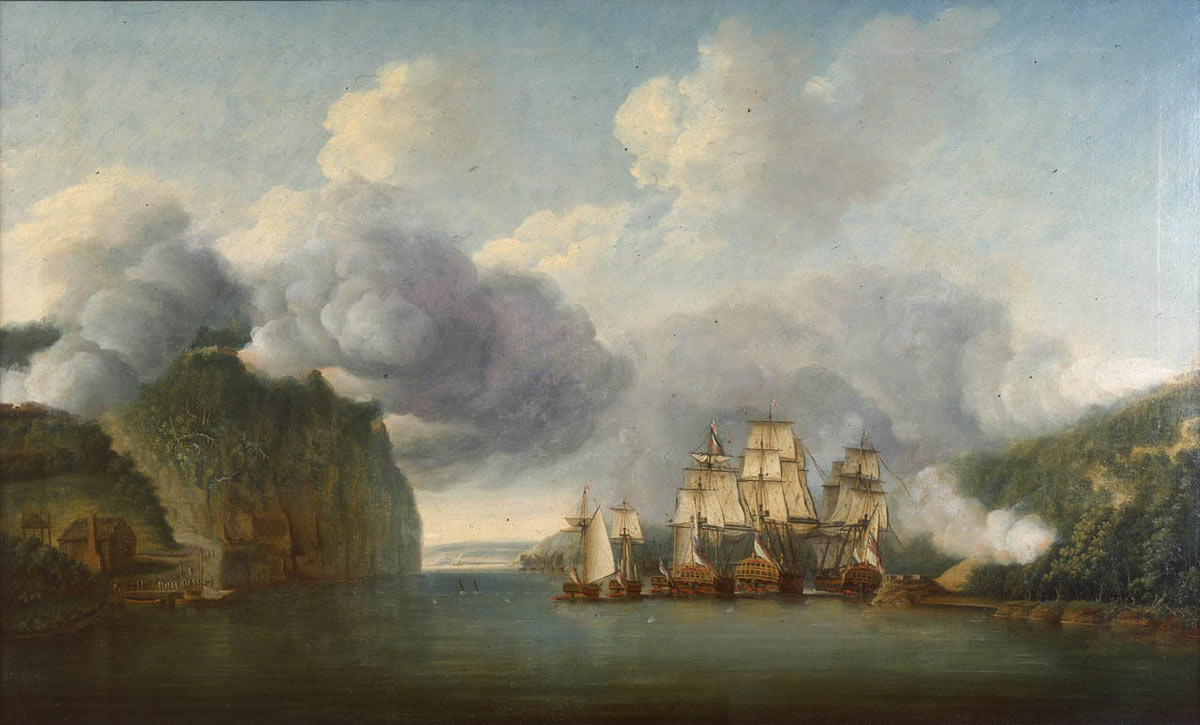
British Royal Navy ships forcing a passage up the Hudson River on 9th October 1776: Battle of Fort Washington on 17th November 1776 in the American Revolutionary War
The previous battle of the American Revolutionary War is the Battle of White Plains
The next battle of the American Revolutionary War is the Battle of Trenton
To the American Revolutionary War index
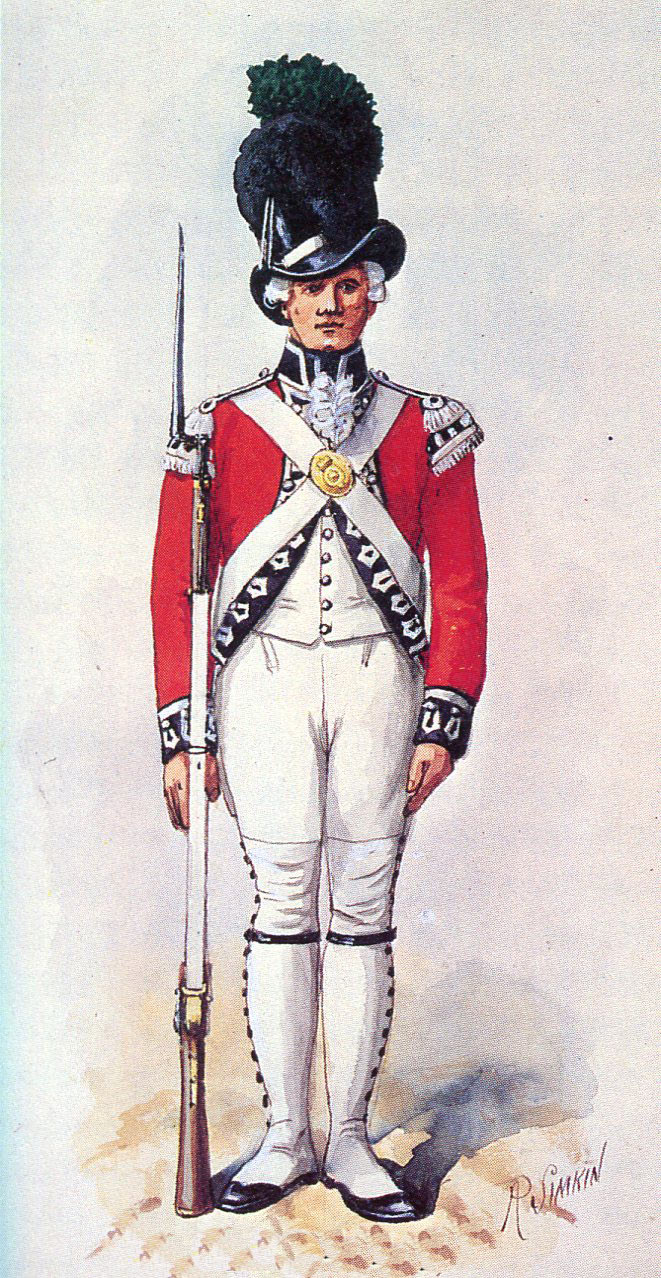
Light Company Man 1st Foot Guards: Battle of Fort Washington on 17th November 1776 in the American Revolutionary War: picture by Richard Simkin
Battle: Fort Washington
War: American Revolution
Date of the Battle of Fort Washington: 16th November 1776
Place of the Battle of Fort Washington: New York, United States of America
Combatants at the Battle of Fort Washington: British and German troops against the American Continental Army.
Generals at the Battle of Fort Washington: Lieutenant–General William Howe commanded the British army.
While General George Washington was in overall command of the American army contesting the invasion of New York Colony by the British, General Nathan Greene commanded the American troops in Fort Lee and Fort Washington. Greene exercised his command from Fort Lee, on the opposite side of the Hudson River from Fort Washington, with Colonel McGaw in command of the troops around Fort Washington.
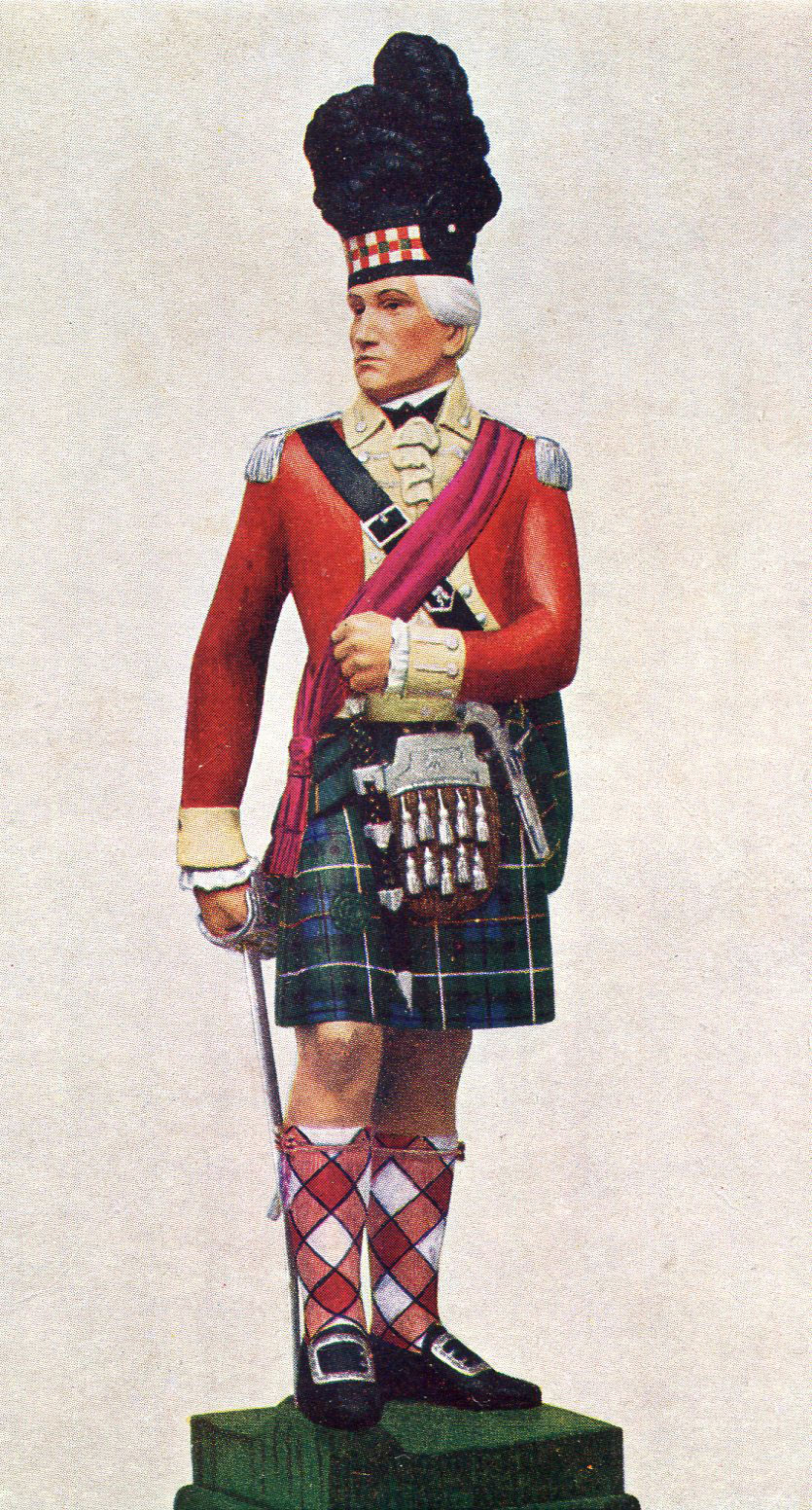
Officer of a highland regiment: Battle of Fort Washington on 17th November 1776 in the American Revolutionary War: statuette by Pilkington Jackson
Size of the armies at the Battle of Fort Washington: 8,000 British and German troops attacked some 2,900 American troops.
Uniforms, arms and equipment at the Battle of Fort Washington: The British wore red coats, with bearskin caps for the grenadiers, tricorne hats for the battalion companies and caps for the light infantry.
The two regiments of light dragoons that served in America, the 16th and 17th, wore red coats and leather crested helmets.
The German infantry wore blue coats and retained the Prussian style grenadier mitre cap with brass front plate.
The Americans dressed as best they could. Increasingly as the war progressed regular infantry regiments of the Continental Army wore blue uniform coats, but the militia continued in rough clothing.
Both sides were armed with muskets, bayonets and cannons, mostly of small calibre. The Pennsylvania regiments and other men of the woods carried long, small calibre, rifled weapons.
Winner of the Battle of Fort Washington: The British and Germans. Once the Americans were pushed back into Fort Washington, they were forced to surrender.
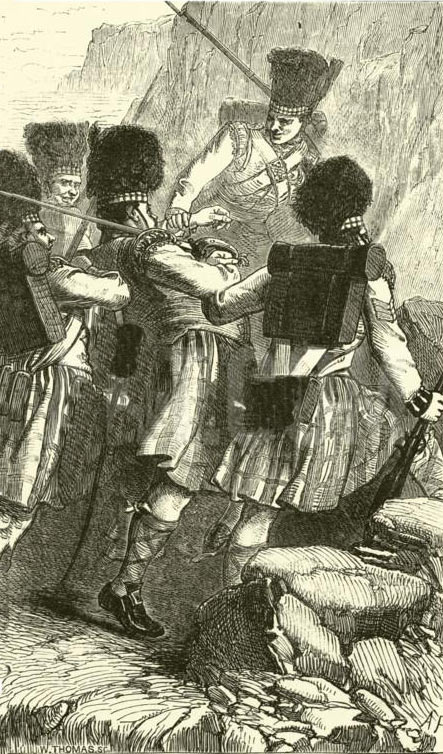
Major Murray and Black Watch Highlanders at the Battle of Fort Washington on 17th November 1776 in the American Revolutionary War
British Regiments at the Battle of Fort Washington:
Composite battalions of grenadiers, light infantry and Foot Guards (1st, 2nd and 3rd Guards)
4th, 10th, 15th, 23rd (Royal Welsh Fusiliers), 27th, 28th, 33rd, 38th, 42nd (Black Watch), 43rd, 52nd Foot and Fraser’s Highlanders.
American Regiments at the Battle of Fort Washington:
Colonel Shee’s 3rd Pennsylvania Regiment, Colonel Magaw’s 5th Pennsylvania Regiment, Colonel Moses Rawling’s Maryland and Virginia Riflemen and Colonel Baxter’s Bucks County Militia, Pennsylvania.
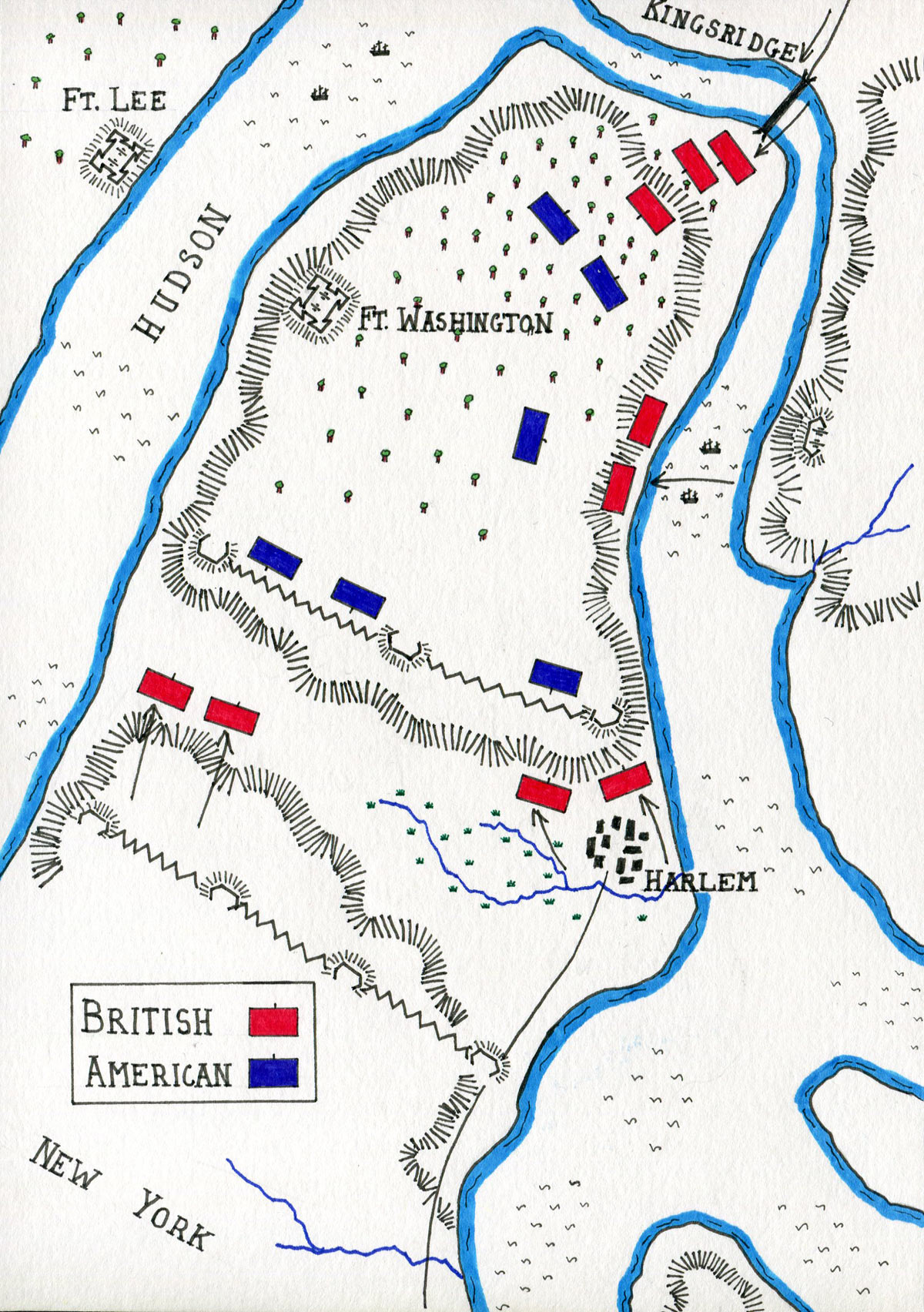
Map of the Battle of Fort Washington on 17th November 1776 in the American Revolutionary War: map by John Fawkes
Account of the Battle of Fort Washington:
In November 1776, the last position the Americans held on Manhattan Island was the area around Fort Washington on the northern tip, known as Harlem Heights. General Nathan Greene commanded the American positions with a discretion to withdraw if he considered it necessary.
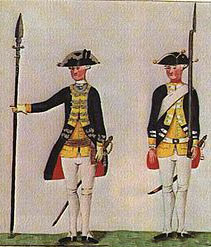
Hessian officer and musketeer: Battle of Fort Washington on 17th November 1776 in the American Revolutionary War
General Howe planned three attacks. Brigadier Lord Percy was to attack from the South up the island. Brigadier Matthews with the light infantry and Guards was to cross the Harlem River and attack the Bucks County Militia commanded by Colonel Baxter on the east side, supported by General Cornwallis with the grenadiers and the 33rd Foot.
The main attack was to be on Rawlings’ position by Hessian troops commanded by General von Knyphausen. An additional assault was to be carried out on the same side by the 42nd under Colonel Sterling.
Early on the 15th November 1776, Howe called on Fort Washington to surrender. This was refused. The British batteries positioned on the far side of the Harlem River and the frigate Pearl began a bombardment of the American positions.
At 10am on 16th November 1776, Lord Percy advanced to the attack. At noon Brigadier Matthews landed on Manhattan and began his assault.
Colonel Baxter was killed and his Pennsylvania militia fled into the fort.
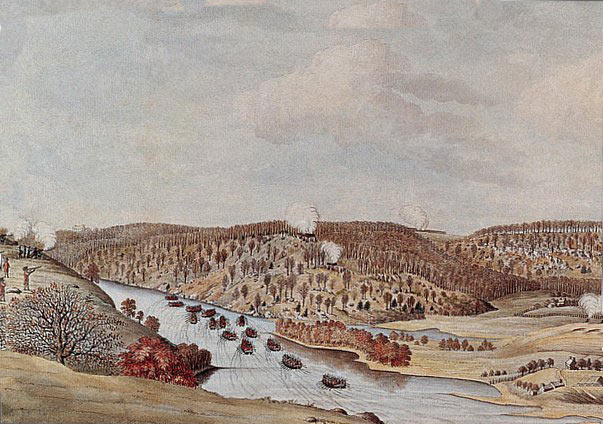
Battle of Fort Washington on 17th November 1776 in the American Revolutionary War
Knyphausen crossed onto Manhattan at Kingsbridge and at 10am began his move south. The two Hessian columns assaulted the American positions and, after a hard fight, Rawlings’ riflemen fell back into the fort.
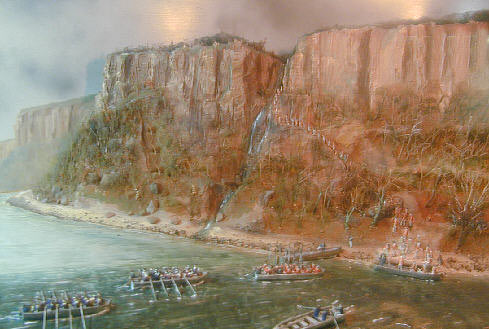
Landing on the East Side: Battle of Fort Washington on 17th November 1776 in the American Revolutionary War
Percy attacked Cadwallader in the South and the 42nd landed on the east side and pushed inland behind Cadwallader’s position, forcing the Americans to fall back to the fort.
With all the American troops pinned in Fort Washington under heavy fire, Magaw was forced to surrender to the Hessian general Knyphausen.
Casualties at the Battle of Fort Washington: The British side suffered 450 casualties of which 320 were Hessians. The Americans suffered 2,900 casualties of which the preponderance were prisoners.
Follow-up to the Battle of Fort Washington: Following the battle Fort Lee on the west bank of the Hudson was abandoned and Washington and the Continental Arm retreated to the Delaware.
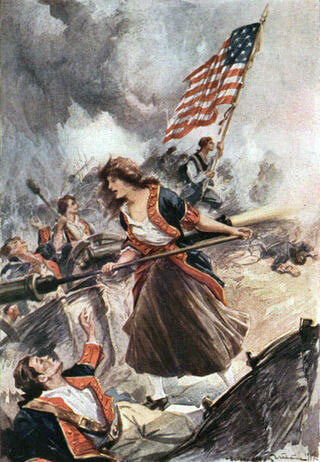
Margaret Corbin at the Battle of Fort Washington on 17th November 1776 in the American Revolutionary War
Anecdotes from the Battle of Fort Washington:
- Of the British troops, the composite battalions of grenadiers, light infantry and Foot Guards and the 33rd and 42nd (Black Watch) Foot were the corps regularly used for demanding assignments. Of the line regiments, the 33rd possessed a consistently high reputation throughout the 1740s and 1750s and was known as ‘the pattern‘.
- An American woman, Margaret Corbin, a nurse, accompanied her husband John Corbin when he took his position as a gunner, facing the attack by the Hessians of General von Knyphausen at Kingsbridge. On the death of John Corbin, Margaret took his place in the gun crew, until she was wounded. After the battle, Margaret was exchanged as a wounded combatant, continued to serve in the American Continental Army and was granted a pension after the war.
References for the Battle of Fort Washington:
History of the British Army by Sir John Fortescue
The War of the Revolution by Christopher Ward
The American Revolution by Brendan Morrissey
The previous battle of the American Revolutionary War is the Battle of White Plains
The next battle of the American Revolutionary War is the Battle of Trenton
To the American Revolutionary War index