Prince Charles Edward Stuart’s decisive defeat of the Government Army led by Sir John Cope launching the ’45 Rebellion on a course that would take the Jacobite Army deep into England
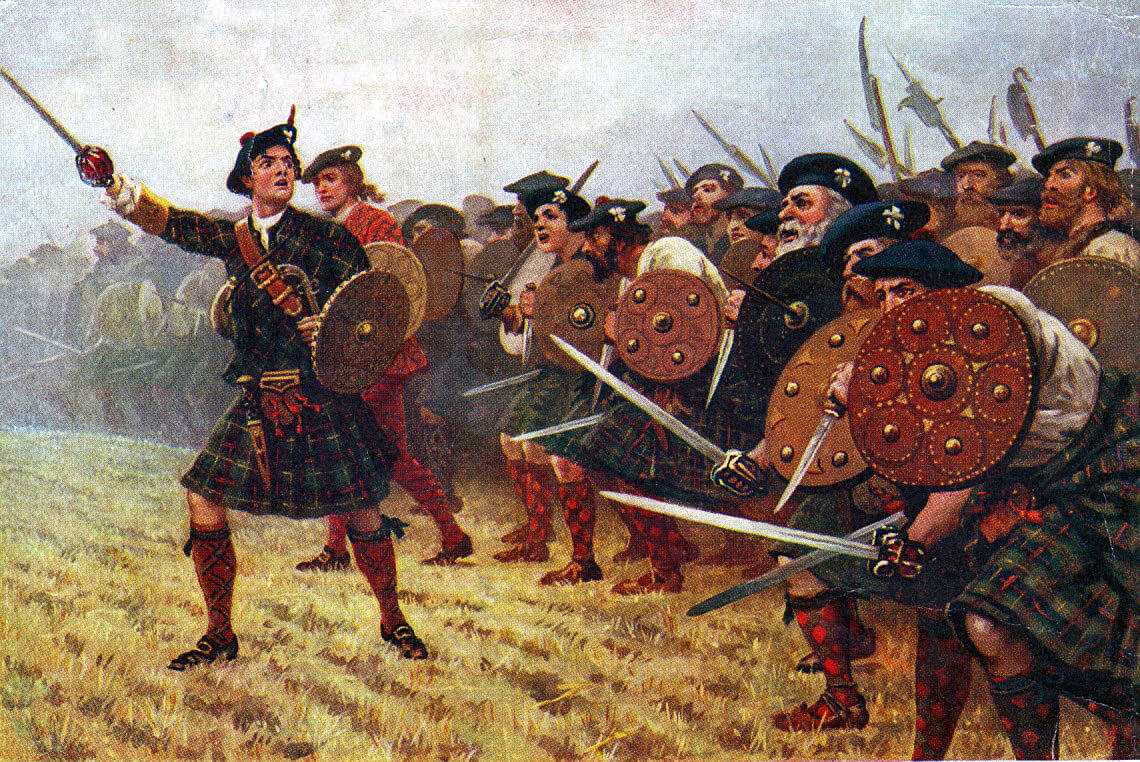
Highland Attack at the Battle of Prestonpans 21st September 1745 in the Jacobite Rebellion
The previous battle in the British Battles series is the Battle of Lauffeldt
The next battle of the 1745 Jacobite Rebellion is the Battle of Falkirk
To the 1745 Jacobite Rebellion index
Battle: Prestonpans
War: The Jacobite Rebellion of 1745
Date of the Battle of Prestonpans: 21st September 1745 (Old Style) (2nd October 1745 New Style). The dates in this page are given in the Old Style.
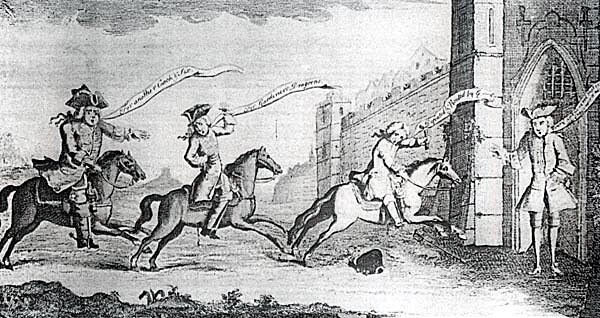
Contemporary print showing Sir John Cope arriving at Berwick to announce his defeat at Prestonpans: Battle of Prestonpans on 21st September 1745 in the Jacobite Rebellion
Place of the Battle of Prestonpans: South East of Edinburgh in Scotland
Combatants at the Battle of Prestonpans: The Highland Army of Prince Charles and the Royal Troops of King George II
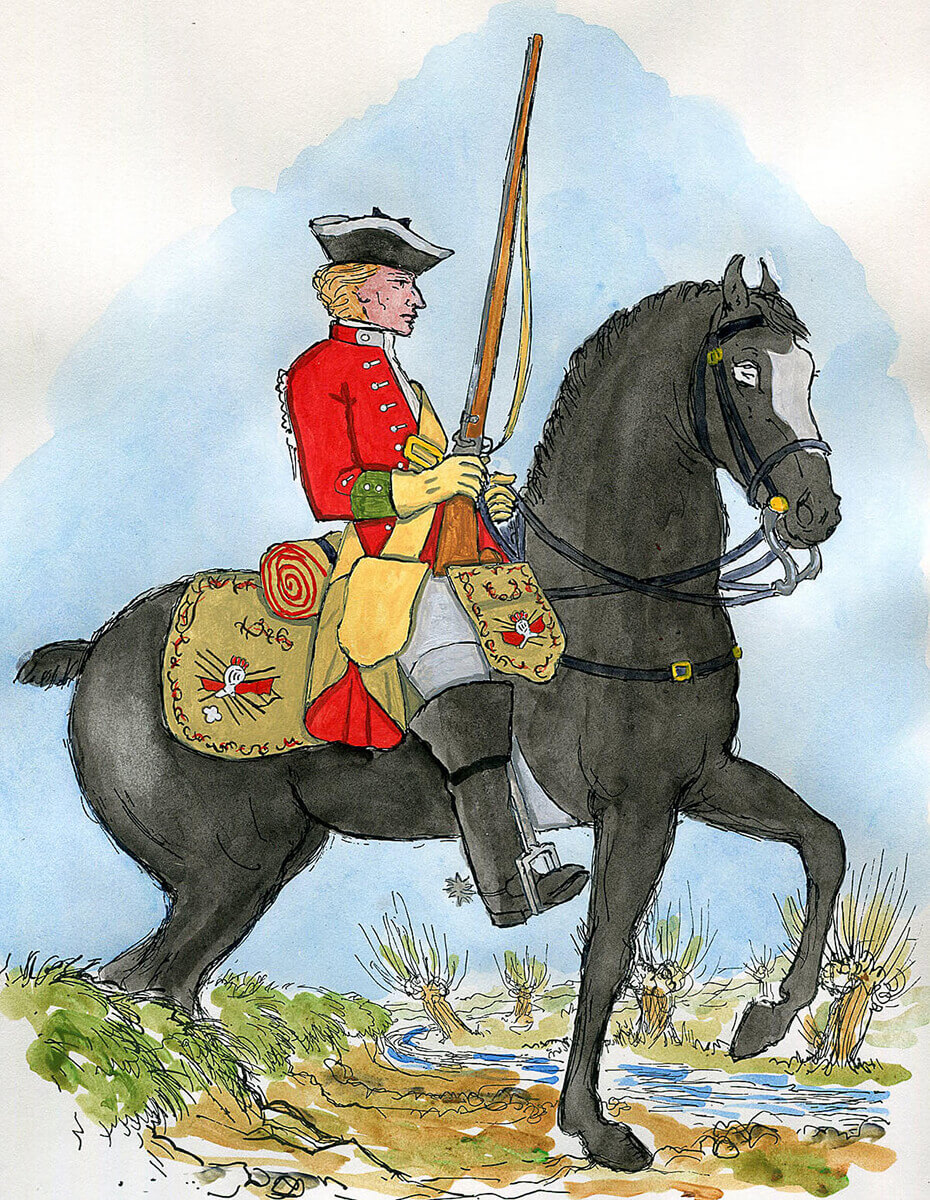
13th Dragoons: Battle of Prestonpans on 21st September 1745 in the Jacobite Rebellion
Generals at the Battle of Prestonpans: Prince Charles, Lord George Murray against Sir John Cope
Size of the armies at the Battle of Prestonpans: Highlanders: 2,500 men. Royal Army: 2,300 men and 6 guns.
Winner of the Battle of Prestonpans: Prince Charles’ Army
British Regiments at the Battle of Prestonpans: This battle is not a battle honour for British Regiments. The regiments present at the battle were: Gardiner’s (13th) and Hamilton’s (14th) Dragoons, Guise’s (6th), Lee’s (44th), Murray’s (46th) and Lascelles (47th) Foot
Background to the Battle of Prestonpans:
On 25th July 1745 Prince Charles landed near Moidart in the Highlands of Scotland with seven companions. He raised his standard at Glenfinnan and assembled an army from the clans that supported his bid for the throne. This army marched into Edinburgh on 17th September 1745. The two royal dragoons regiments fled at the highland approach in the infamous “Colterbrigg canter”.
Account of the Battle of Prestonpans: General Sir John Cope, the commander of the small royal force in Scotland, had marched to Inverness with his four regiments of foot. Cope brought his troops south to Dunbar by sea and met up with the dragoons. None of his troops, dragoons or foot, were experienced or even adequately trained. Cope’s artillery can only be described as a “scratch” force comprising invalids and seamen under by one aged gunner. Cope marched North along the coast road towards Edinburgh.
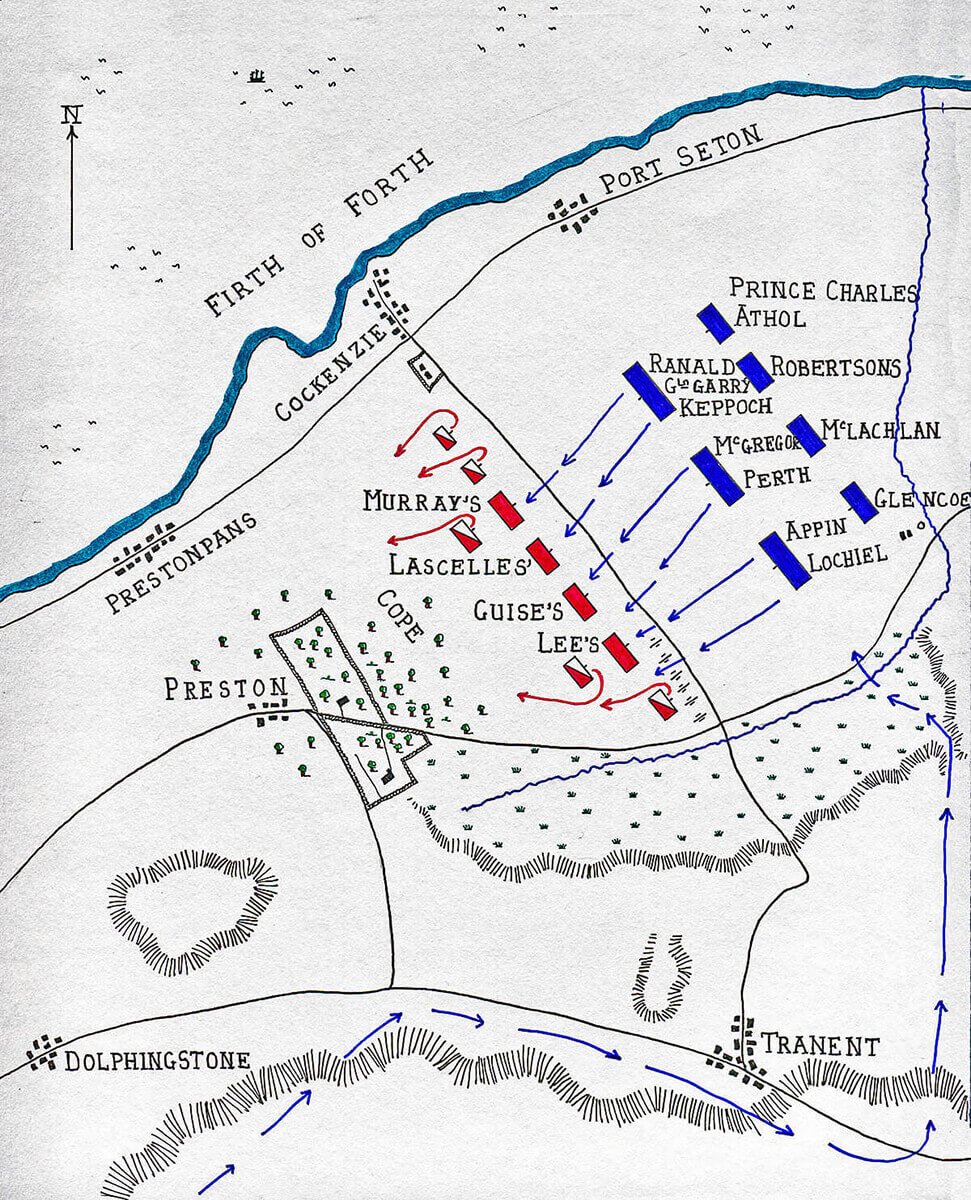
Map of the Battle of Prestonpans on 21st September 1745 in the Jacobite Rebellion by John Fawkes
The cavalry found the rebel army to be inland and to the south, causing Cope to form his army against the sea behind a marsh. During the night of 20th September 1745 the rebels made use of a path through the marsh to come up on the left flank of the royal army.
Cope reformed his line to the left with the foot in the centre, the guns and mortars on their right and dragoon regiments on each end of the line. The highland army launched a charge at which the gunners fled leaving two officers to fire the six guns and six mortars.
On being threatened the dragoon regiments also fled and the foot began to give way. Finally under the impact of the highland attack the whole royal army, other than small groups of men under officers such as Lieutenant Colonel Peter Halkett, fled the field. Only the dragoons were able to get away in any numbers. All the foot bar some 170 were killed, wounded or captured. The injuries inflicted by the highlanders using broad swords and bill hooks are reported to have been horrific.
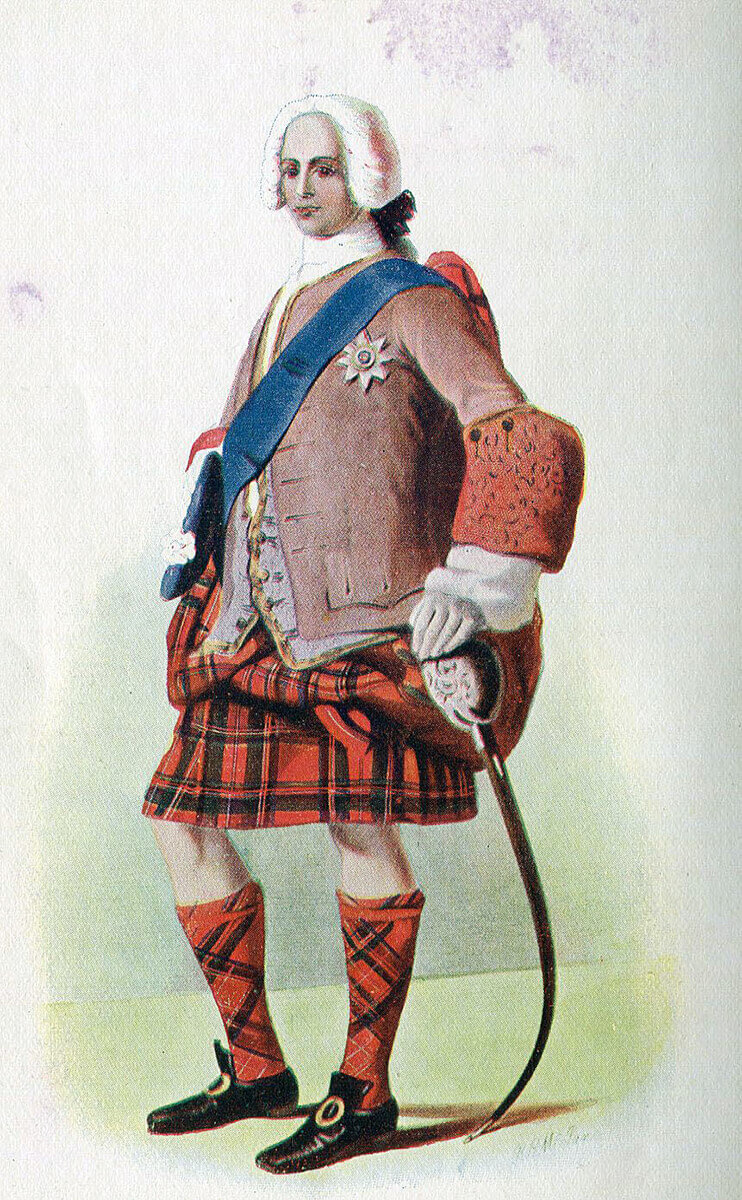
Prince Charles Edward Stuart: Battle of Prestonpans on 21st September 1745 in the Jacobite Rebellion
Casualties: The royal casualties are said to have been: around 300 killed, 400 to 500 wounded and 1,400 to 1,500 captured. Only 170 of the foot got away.
The highlanders probably lost less than 30 killed and 70 wounded.
Follow-up:
Following the battle most of Scotland was in Prince Charles’ hands other than Edinburgh Castle held by General Guest and Stirling Castle held by the stalwart General Blakeney.
Regimental anecdotes and traditions:
- This battle illustrates well the lack of any formal system for training the English Army of this time. Cope’s regiments, both foot and dragoons lacked either training or experience. Cope failed to ensure that he had a proper train of artillery.
- Sir John Cope became a figure of ridicule for the Scottish Nation. Hence the pipe tune “Hey Johnnie Cope are ye sleeping yet?”
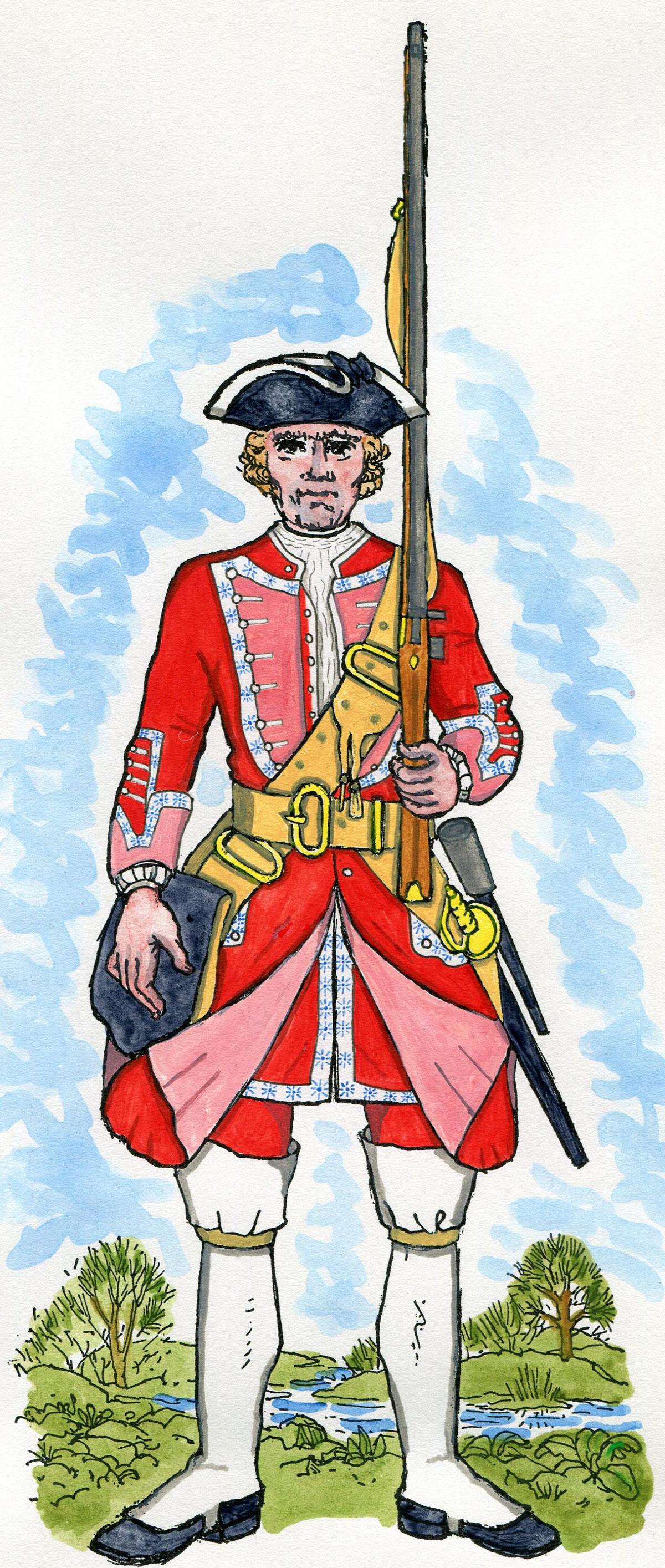
44th Regiment of Foot: Battle of Prestonpans 21st September 1745 in the ’45 Rebellion
- It is said that General Lord Mark Kerr met Cope at Berwick and told him he was the first general in history to bring news of his own defeat.
- Sir John Cope is reputed to have wagered £10,000 that his successor as commander-in-chief would also be defeated by Prince Charles’s Highlanders. He won (see the Battle of Falkirk) and the wager is said to have made him a wealthy man.
- Colonel Gardiner, the commander of the 13th Dragoons was wounded at the Battle of Malplaquet. A devout man Gardiner wrote a book of devotion.
- In 1755 Sir Peter Halkett led the 44th Regiment, of which he was then the colonel, in Braddock’s expedition to the Monongahela River where he and many of his men were killed by Indians fighting for the French.
References:
- Fortescue’s History of the British Army Volume 1 Part II
- Battles of the ’45 by Tomasson and Buist.
The previous battle in the British Battles series is the Battle of Lauffeldt
The next battle of the 1745 Jacobite Rebellion is the Battle of Falkirk
To the 1745 Jacobite Rebellion index