General George Washington’s resounding victory and the surrender of Lord Cornwallis’s British army on 19th October 1781; the end for Britain in the American Colonies
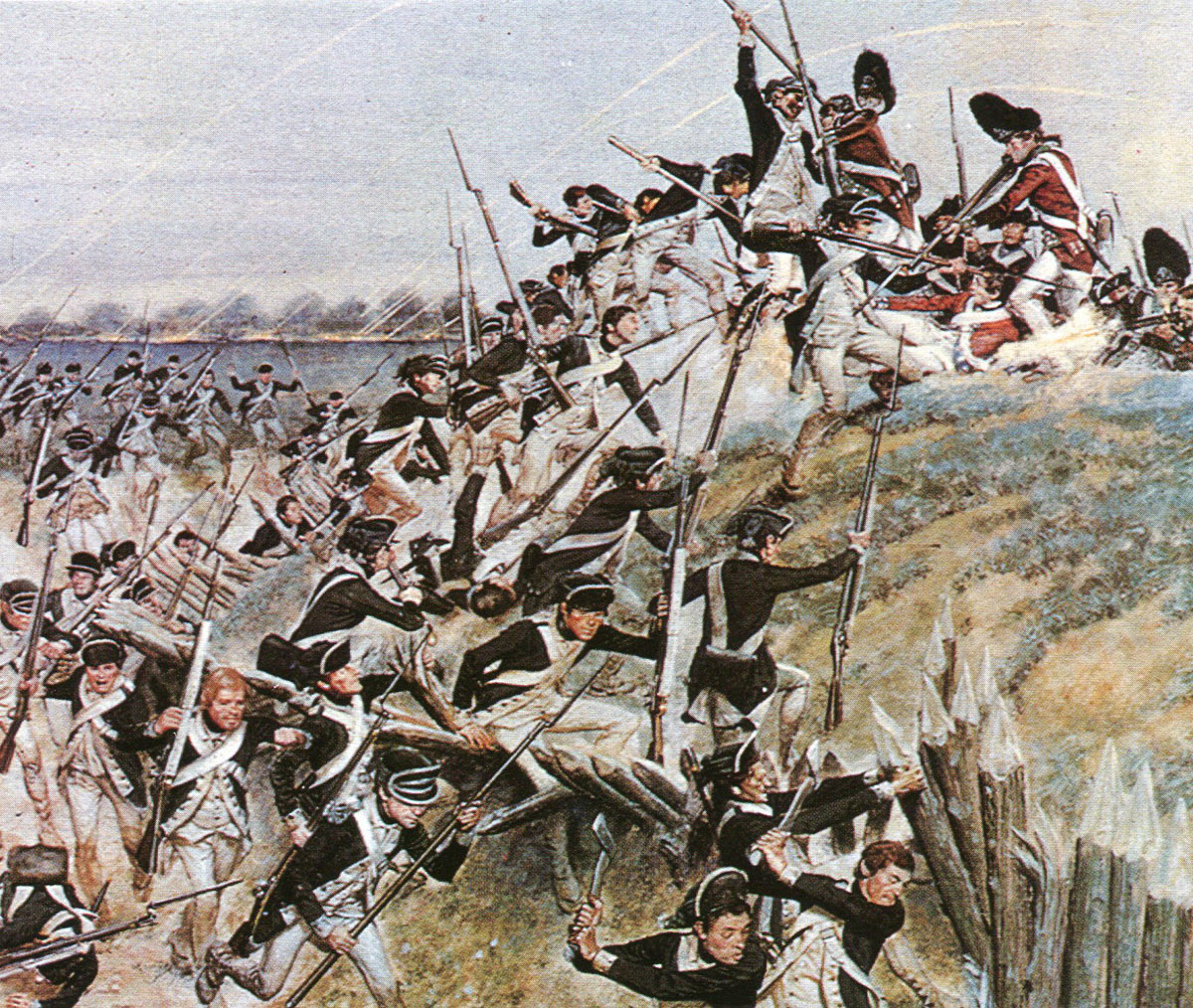
American troops storming a British redoubt: Battle of Yorktown 28th September to 19th October 1781 in the American Revolutionary War
The previous battle of the American Revolutionary War is the Battle of Guildford Courthouse
The next battle in the American Revolutionary War is the Siege of Gibraltar
To the American Revolutionary War index
Battle: Yorktown
War: American Revolutionary War
Dates of the Battle of Yorktown: 28th September to 19th October 1781
Place of the Battle of Yorktown: Virginia in the United States of America
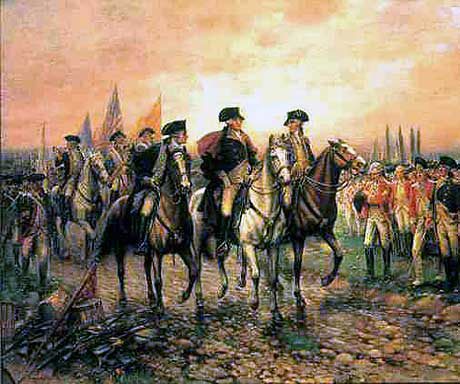
General George Washington reviews the captured British army at Yorktown on 19th October 1781 in the American Revolutionary War
Combatants at the Battle of Yorktown: Americans and French against the British and their German mercenaries
Generals at the Battle of Yorktown: General Washington commanded the American army. Lieutenant-General de Rochambeau commanded the French troops. Major-General Lord Cornwallis commanded the British and German troops.
Size of the armies at the Battle of Yorktown: 8,800 American troops, 7,800 French troops and 6,000 British and German troops.
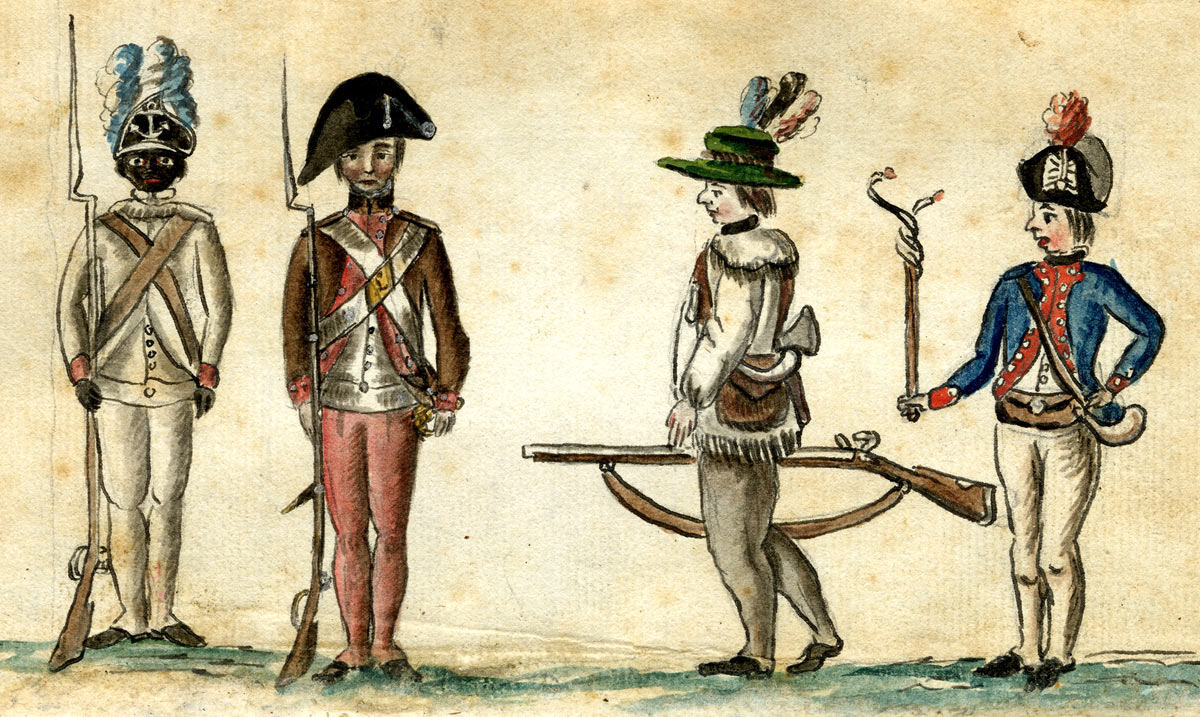
American soldiers sketched by a French officer at the Battle of Yorktown 28th September to 19th October 1781 in the American Revolutionary War
Uniforms, arms and equipment at the Battle of Yorktown:
The British wore red coats, with bearskin caps for the grenadiers, tricorne hats for the battalion companies and caps for the light infantry. The Highland Scots troops wore the kilt and feather bonnet.
The two regiments of light dragoons serving in America, the 16th and 17th, wore red coats and leather helmets in England, but there is clear evidence that they took to wearing green in America.
The Hessian infantry wore blue coats and retained the Prussian style grenadier mitre cap with brass front plate.
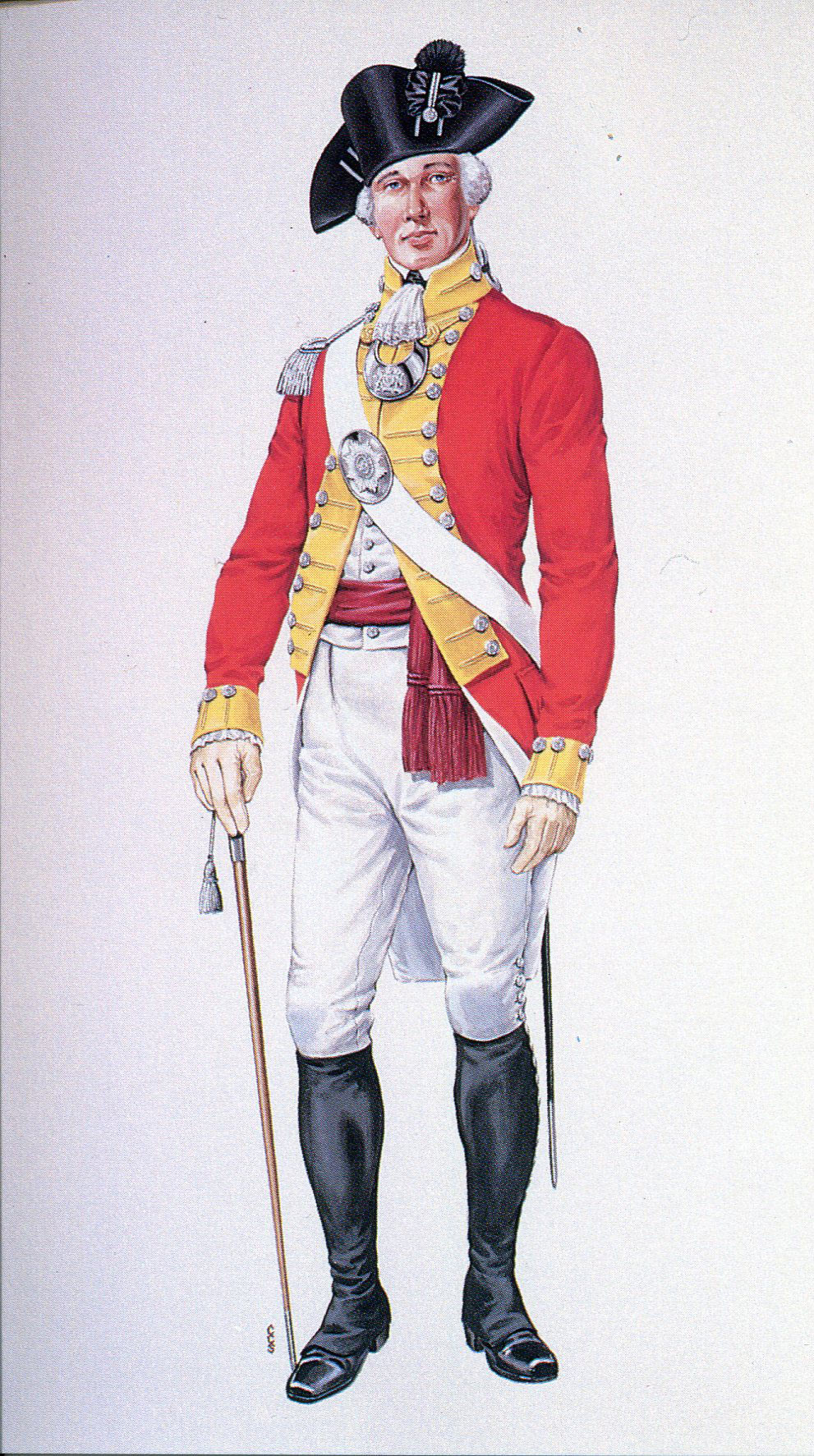
British officer: Battle of Yorktown
The Americans dressed as best they could. Increasingly as the war progressed infantry regiments of the Continental Army took to wearing mostly blue or brown uniform coats. The American militia continued in rough clothing.
Both sides were armed with muskets. The British and German infantry carried bayonets, which were in short supply among the American troops. Steuben in the winter of 1777/8 in Valley Forge insisted that the American Continental Regiments be issued with a standard pattern musket and bayonet, the bayonet being essential to enable the Americans to fight hand-to-hand with the British foot on an equal footing.
Many American soldiers from backwoods areas carried rifles, weapons of considerably greater accuracy than the ordinary musket and which their owners used with proficiency.
Both sides were supported by artillery.
The French royal regiments of foot wore white coats.
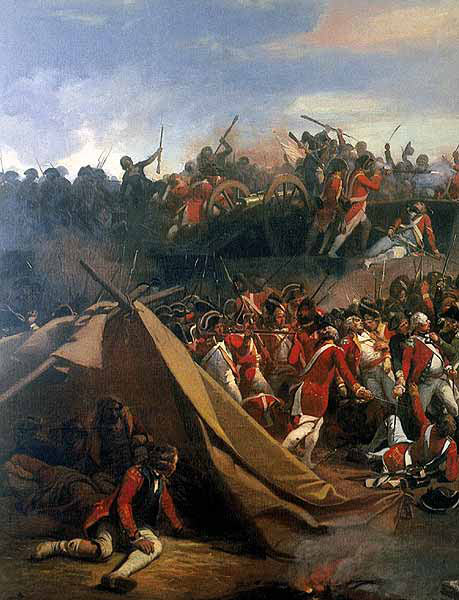
Americans storming the redoubts on 14th October 1781 during the Battle of Yorktown in the American Revolutionary War
Winner of the Battle of Yorktown: The Americans and French.
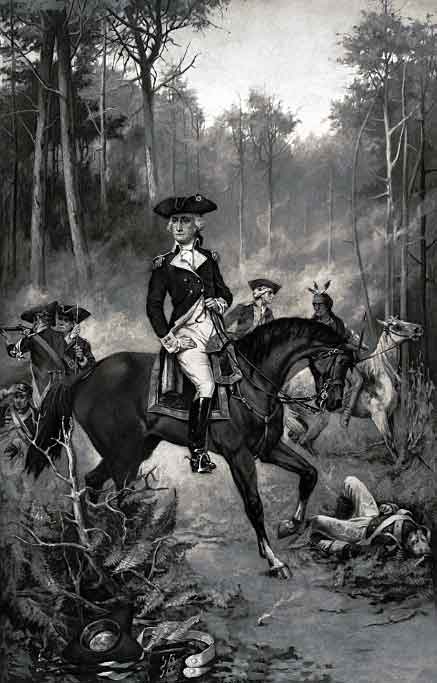
General George Washington at the Battle of Yorktown on 19th October 1781 in the American Revolutionary War
British Regiments at the Battle of Yorktown:
Troop of 17th Light Dragoons (incorporated in Tarleton’s Legion), Royal Artillery, A composite battalion of Foot Guards (comprising 1st, 2nd and 3rd Foot Guards), 17th Foot, 23rd Royal Welch Fusiliers, 33rd Foot, 43rd Foot, 71st Fraser’s Highlanders (disbanded at the end of the war), 76th Foot (disbanded at the end of the war) and 80th Foot (disbanded at the end of the war), Tarleton’s Legion, Simcoe’s Legion and the North Carolina Loyalists.
German Regiments in British pay at the Battle of Yorktown:
Regiment of de Voit (Anspach), Regiment of de Seybothen (Anspach), Regiment of Prince Hereditary (Hesse), Regiment of von Bose (Hesse).
French Regiments at the Battle of Yorktown:
Artillery, Lauzun’s Legion, Bourbonnois Regiment of Foot, Royal Deux-Ponts Regiment of Foot, Soissonois Regiment of Foot and the Agenois Regiment of Foot.
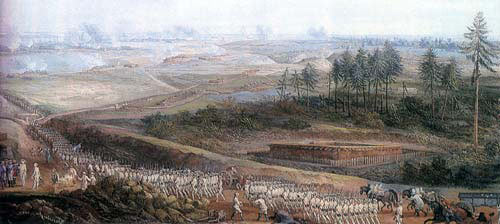
French troops advancing to attack the British lines at the Battle of Yorktown 19th October 1781 in the American Revolutionary War
Americans Regiments at the Battle of Yorktown:
4th Dragoons (Moylan), Armand’s Horse, Lafayette’s Light Infantry, Muhlenburg’s Brigade, Hazen’s Canadian Regiment, 1st New York Regiment, 2nd New York Regiment, 1st New Jersey Regiment, 2nd New Jersey Regiment, Rhode Island Regiment, 1st Pennsylvania Regiment, 2nd Pennsylvania Regiment, Virginia Regiment, 3rd Maryland Regiment, 4th Maryland Regiment, three brigades of Virginia Militia and Sappers and Miners.
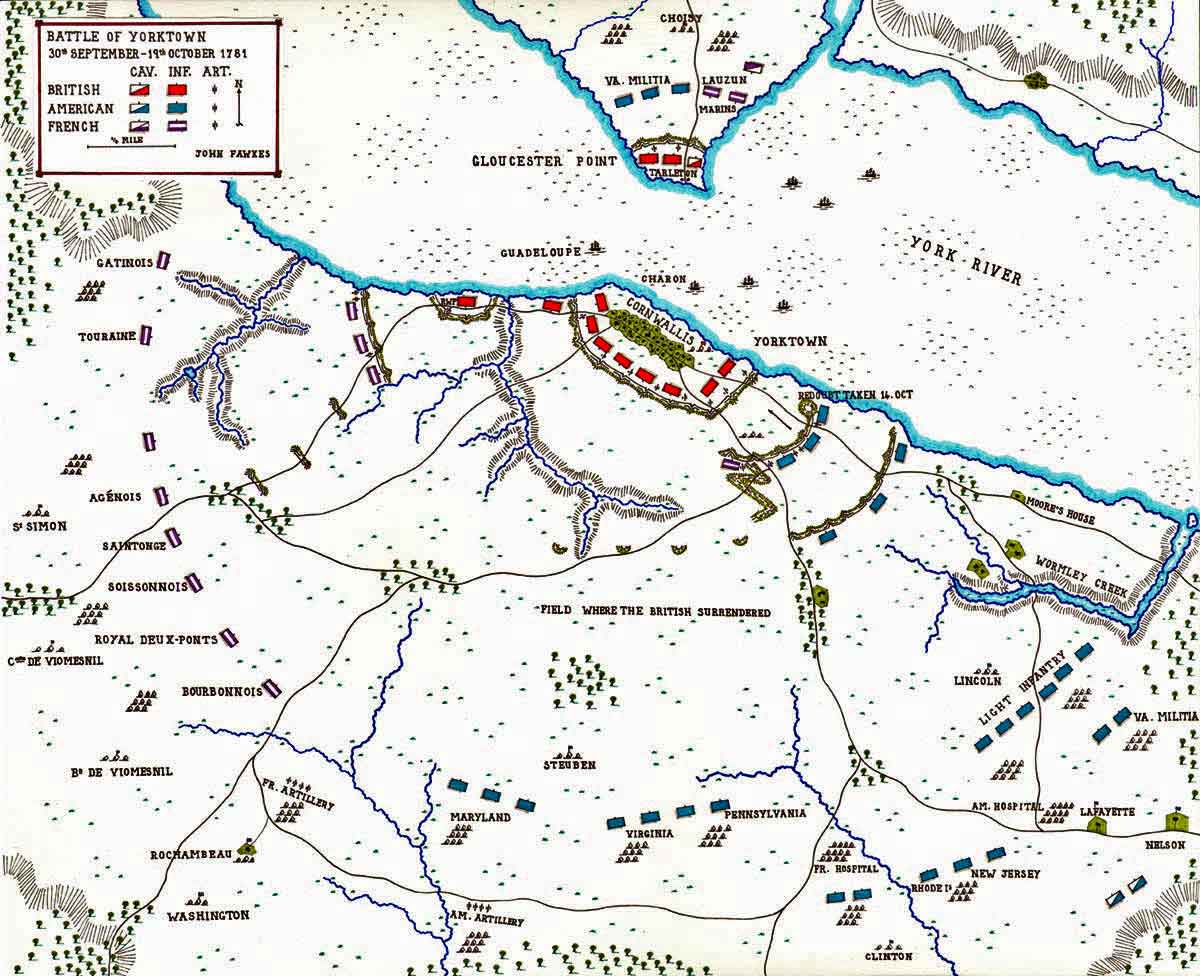
Map of the Battle of Yorktown 28th September to 19th October 1781 in the American Revolutionary War: map by John Fawkes
Account of the Battle of Yorktown:
During the campaigning in 1781, Cornwallis progressively lost his grip on the Carolinas. The years of fighting in America, with no proper supply of recruits to replace British losses, and the intervention of Spain and France in the war, leading to the requirement for British troops in the West Indies and the Mediterranean, left the British much weakened in America.
Cornwallis marched his army into Virginia and seized Yorktown and Gloucester, towns on each side of the York River.
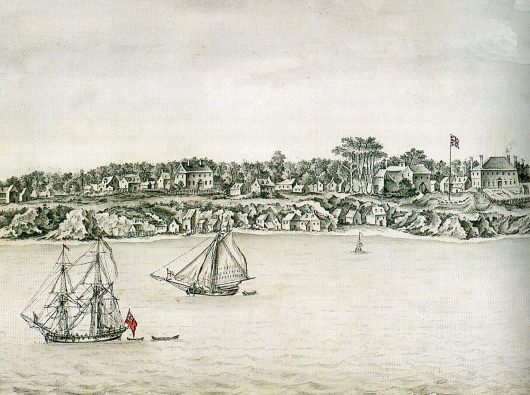
Yorktown 19th October 1781 in the American Revolutionary War
With the arrival of the French fleet of Admiral De Grasse, General Washington was able to march south from New York with the joint American and French army to attack Cornwallis.
Expecting Major-General Clinton to sail from New York with a British relieving force, Cornwallis decided to remain in Yorktown, rather than march south to the Carolinas, or attempt to reach New York.
The Americans and French arrived before Yorktown on 28th September 1781, forming a semi-circle around the British entrenchments and putting the British and German troops under siege.
Cornwallis’s first move was the inexplicable one of abandoning a line of four redoubts that dominated the British positions. The Americans immediately occupied the empty redoubts.
Washington began formal siege operations on the eastern side of Yorktown on 30th September, and on 9th October were sufficiently close to open an artillery bombardment.
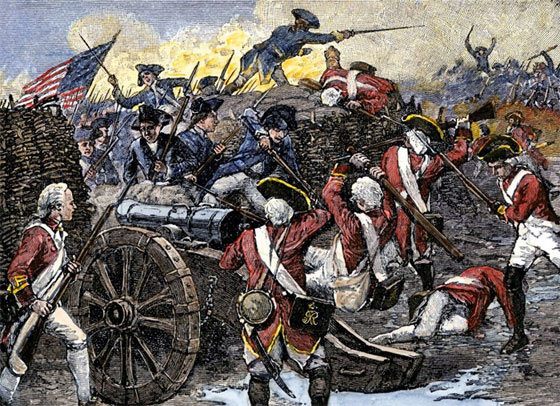
American Continental troops capture British guns at the Battle of Yorktown 28th September to 19th October 1781 in the American Revolutionary War
On 14th October 1781, the Americans and French stormed two redoubts in front of their trenches and Cornwallis’s position in Yorktown became untenable.
The British carried out a sortie on the 16th October, in which several guns in the two redoubts held by the Americans were spiked. On the same day, Cornwallis attempted to pass the Guards, the 23rd Regiment and the Light Infantry across the York River to Gloucester, but was thwarted by a storm.
With no sign of Clinton’s relief, and with inadequate supplies of artillery ammunition and food, on 19th October 1781, Cornwallis’s army marched out of Yorktown and surrendered to George Washington.
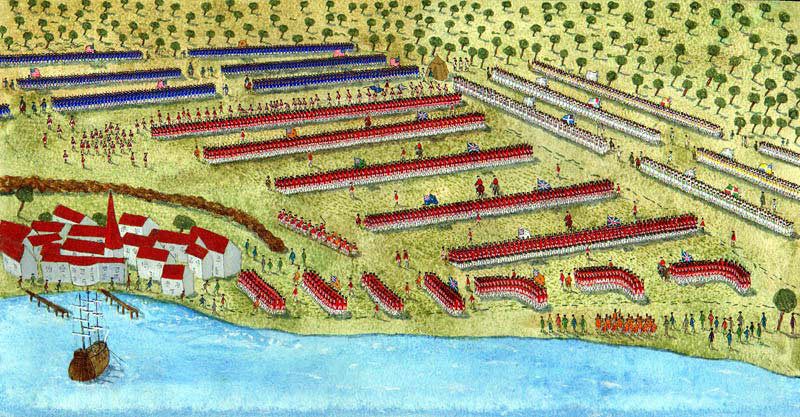
British surrender: Battle of Yorktown 28th September to 19th October 1781 in the American Revolutionary War: picture by John Fawkes
Casualties at the Battle of Yorktown:
6,000 British troops surrendered to the Americans and French with 10 stands of German and British colours, guns, small arms, ammunition and equipment.
The casualties during the siege were 500 British, 80 Americans and 200 French killed and wounded.
Follow-up to the Battle of Yorktown:
The capitulation of Clinton’s army at Yorktown ended the major battles of the American Revolutionary War, although local fighting continued in areas where there were strong loyalist communities. General Leslie’s force in Charleston and the British left in New York were evacuated by ship. The war was formally ended by the Treaty of Paris, signed in 1783, that acknowledged the independence of the American states.
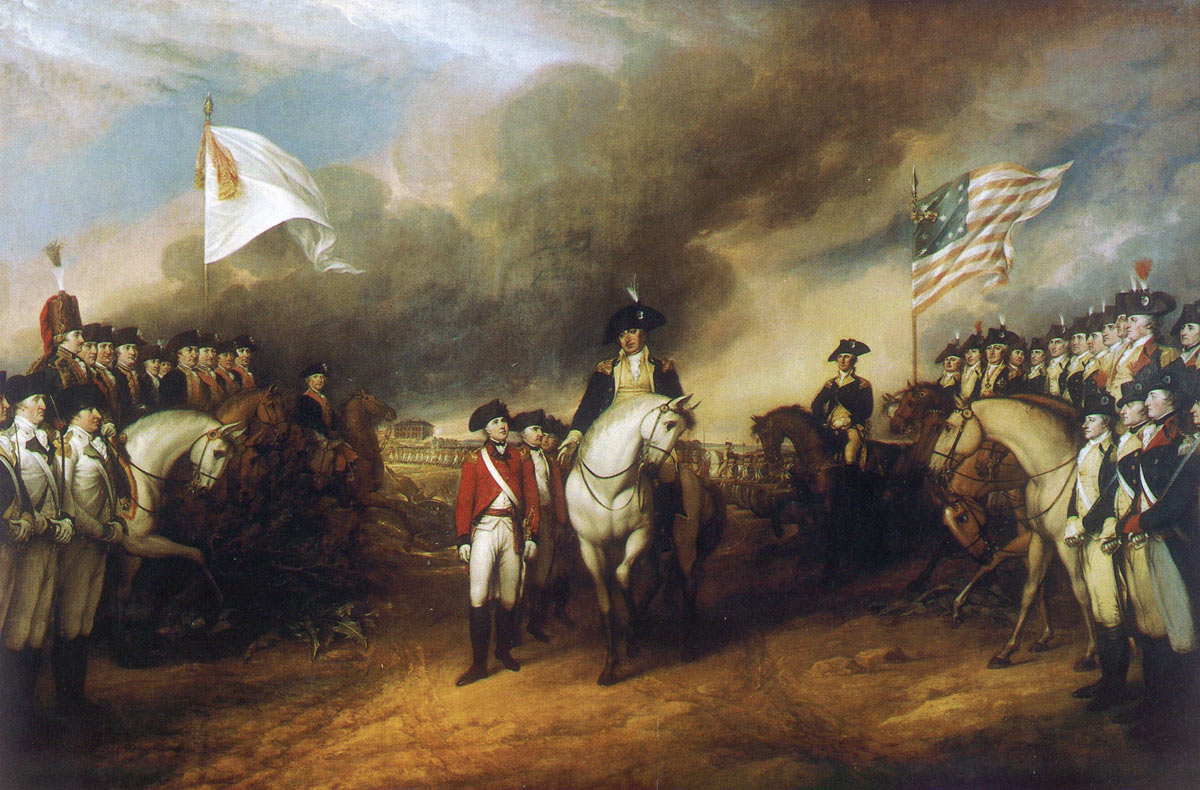
Surrender of the British army at the Battle of Yorktown 28th September to 19th October 1781 in the American Revolutionary War: picture by John Trumbull
Anecdotes and traditions from the Battle of Yorktown:
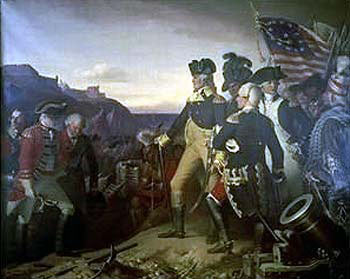
Surrender of the British army to George Washington and General de Rochambeau at Yorktown on 19th October 1781 in the American Revolutionary War: picture by Eugene Hess
- The British bands are reputed to have played “The world turned upside down” as the troops marched out to surrender.
- After the surrender the American and French officers entertained the British officers to dinner, other than Tarleton with whom the Americans refused to sit at table, due to the atrocities committed by his troops in North and South Carolina.
References for the Battle of Yorktown:
History of the British Army by Sir John Fortescue
The War of the Revolution by Christopher Ward
The American Revolution by Brendan Morrissey
The previous battle of the American Revolutionary War is the Battle of Guildford Courthouse
The next battle in the American Revolutionary War is the Siege of Gibraltar
To the American Revolutionary War index