George Washington’s iconic victory on 26th December 1776 over Colonel Rahl’s Hessian troops after crossing the frozen Delaware River; the battle that re-invigorated the American Revolution
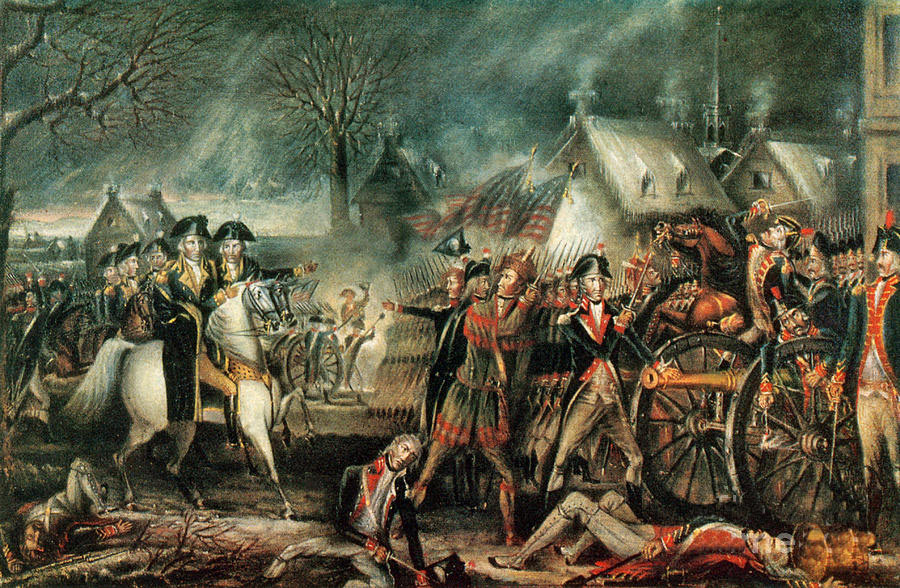
Battle of Trenton on 26th December 1776 in the American Revolutionary War
The previous battle of the American Revolutionary War is the Battle of Fort Washington
The next battle of the American Revolutionary War is the Battle of Princeton
To the American Revolutionary War index
Battle: Trenton
War: American Revolution
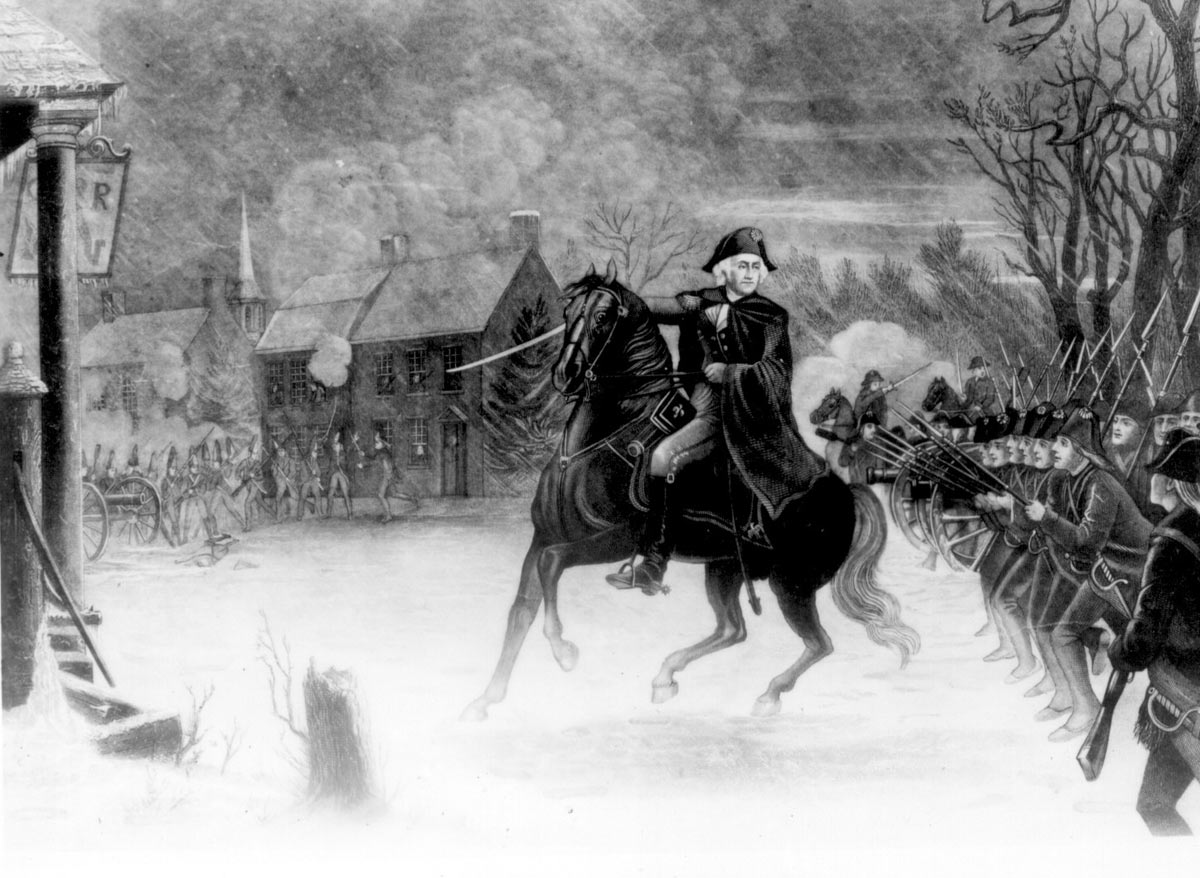
George Washington at the Battle of Trenton on 26th December 1776 in the American Revolutionary War
Date of the Battle of Trenton: 26th December 1776
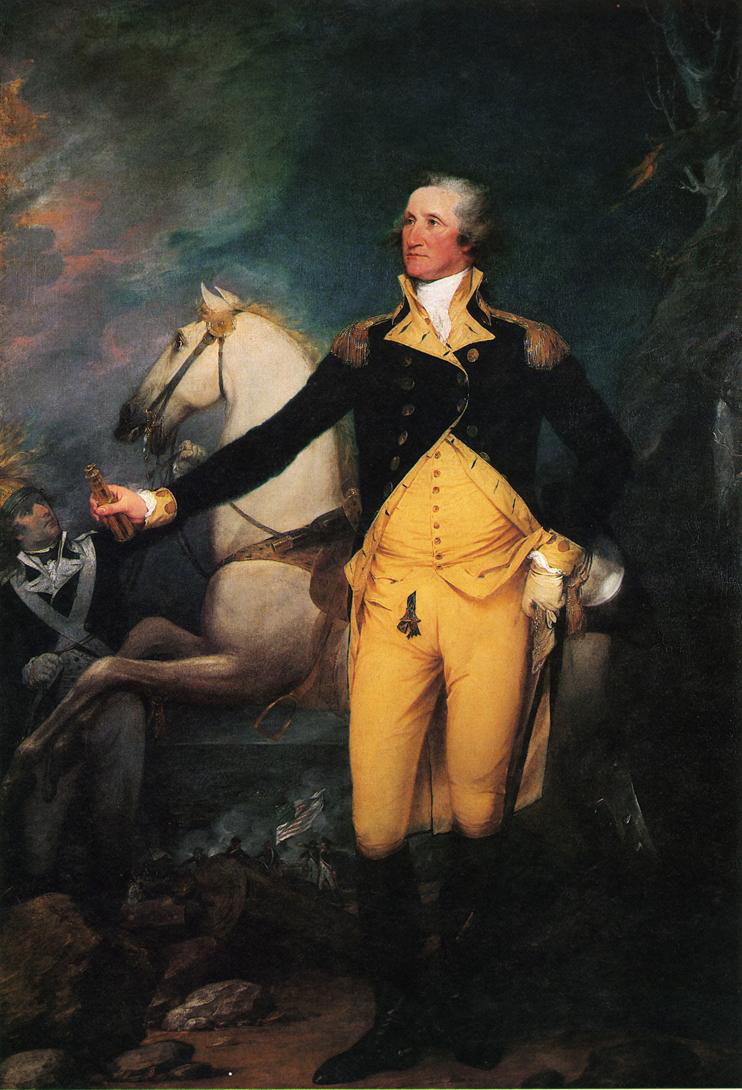
George Washington before the Battle of Trenton on 26th December 1776 in the American Revolutionary War: picture by John Trumbull
Place of the Battle of Trenton: Trenton, New Jersey, on the Delaware River in the United States of America
Combatants at the Battle of Trenton: Americans against Hessians and British troops
Generals at the Battle of Trenton: General George Washington against the Hessian Colonel Rahl.
Size of the armies at the Battle of Trenton:
2,400 American troops with 18 guns against 1,400 Hessians with 6 light guns. A troop of the British 16th Light Dragoons left Trenton at the onset of the fighting.
Uniforms, arms and equipment at the Battle of Trenton: The two regiments of British light dragoons that served in America, the 16th and 17th, wore red coats and leather crested helmets.
The Hessian infantry wore blue coats and retained the Prussian style grenadier mitre cap with brass front plate.
The Americans dressed as best they could. Increasingly as the war progressed regular infantry regiments of the Continental Army wore blue uniform coats, but the militia continued in rough clothing.
Both sides were armed with muskets, bayonets and cannon, mostly of small calibre. The Pennsylvania regiments and other men of the woods carried long, small calibre, rifled weapons.
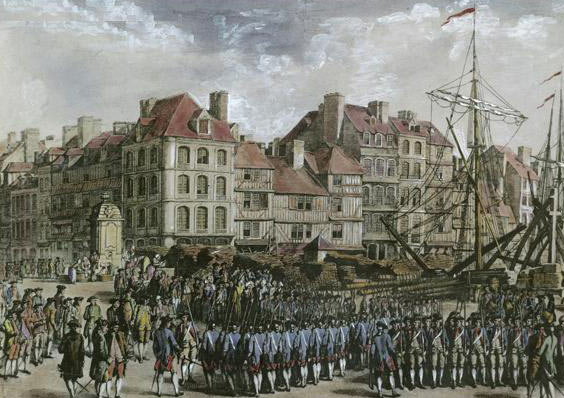
Hessian troops arriving in America; Battle of Trenton on 26th December 1776 in the American Revolutionary War
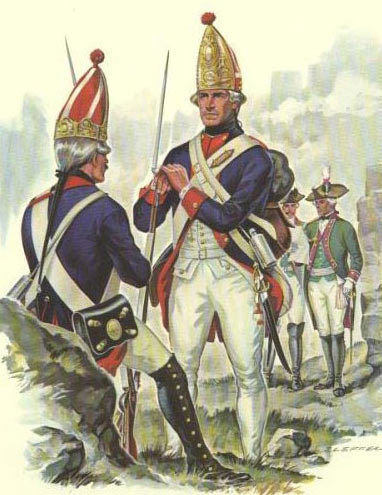
Hessian troops: Battle of Trenton on 26th December 1776 in the American Revolutionary War
Hessian Troops at the Battle of Trenton: The British Government was unable to recruit sufficient British troops to fight the American Revolutionary War. There was considerable sympathy in Britain for the cause of the American Colonists and many considered the American Revolutionary War to be a proxy civil war between the privileged British establishment and the ordinary British citizen.
To make up the shortfall in troops, the British Government turned to its resort from previous wars of paying subsidies to German princelings to provide the troops it needed. The primary source of German troops was Hesse-Kassel, hence the frequent use of ‘Hessians’ to describe any German troops in British pay in the Revolutionary War.
The deployment of German troops provided the Americans with a useful propaganda tool.
In fact, the Hessian troops were largely well-disciplined, and often better behaved than British troops. Many settled in the United States once the war was over.
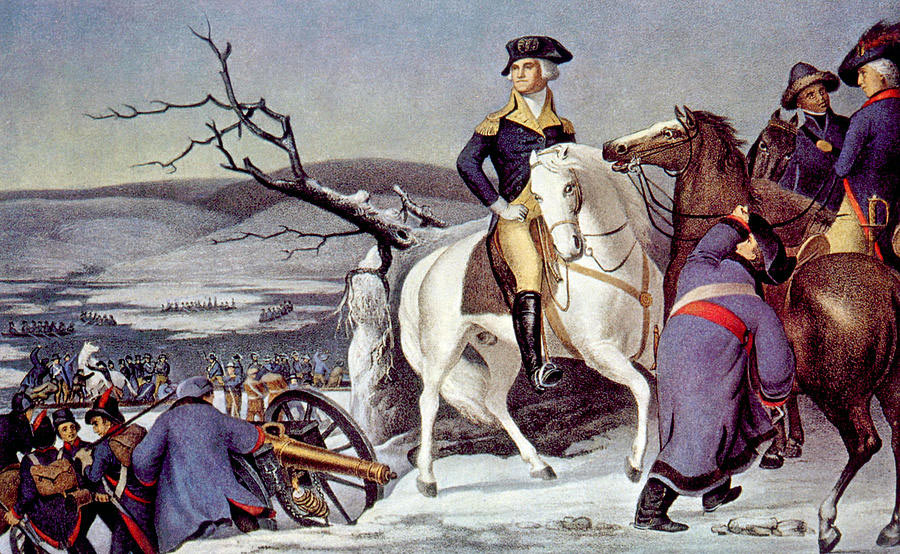
George Washington after crossing the Delaware River: Battle of Trenton on 26th December 1776 in the American Revolutionary War
Winner at the Battle of Trenton: The battle was a resounding actual and moral victory for Washington and his American troops.
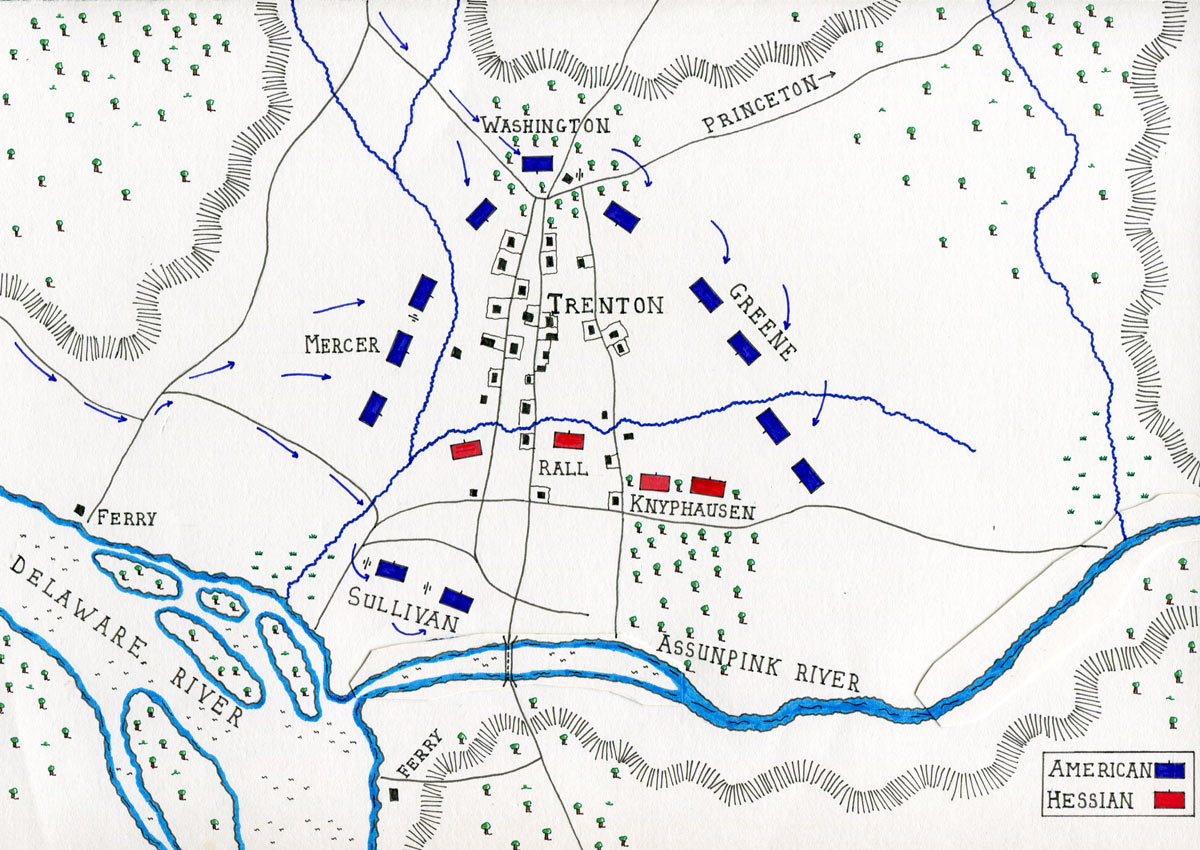
Map of the Battle of Trenton on 26th December 1776 in the American Revolutionary War: map by John Fawkes
Account of the Battle of Trenton:
After being driven out of New York by the British and forced to retreat to the West bank of the Delaware during the late summer of 1776, the American cause was at a low ebb. In the harsh winter, Washington was faced with the annual crisis of the expiry of the Continental Army’s period of enlistment. He resolved to attack the Hessian position at Trenton at the extreme southern end of the over-extended British line along the Delaware, before his army dispersed.
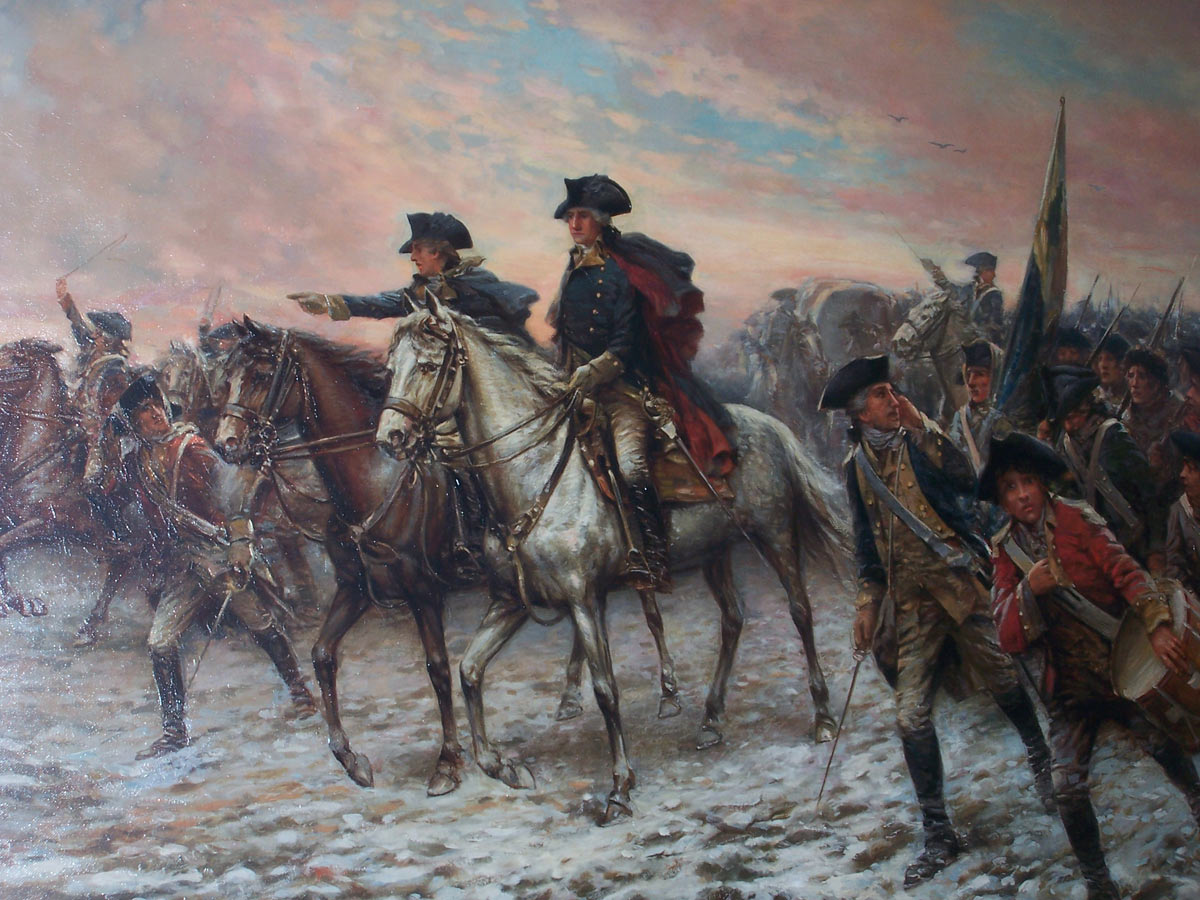
George Washington leading his troops to the attack at the Battle of Trenton on 26th December 1776 in the American Revolutionary War: picture by Frederick Coffay Yohn
Washington’s plan was to cross the Delaware River at three points; the first by a force commanded by Lieutenant-Colonel Cadwallader, with a Rhode Island regiment, some Pennsylvanians, Delaware militia and two guns; a second force under Brigadier Ewing of militia; and the third commanded by himself, which would cross the river above Trenton and attack the Hessian garrison in the town. Washington had, as his subordinates, Major Generals Nathaniel Greene and John Sullivan.
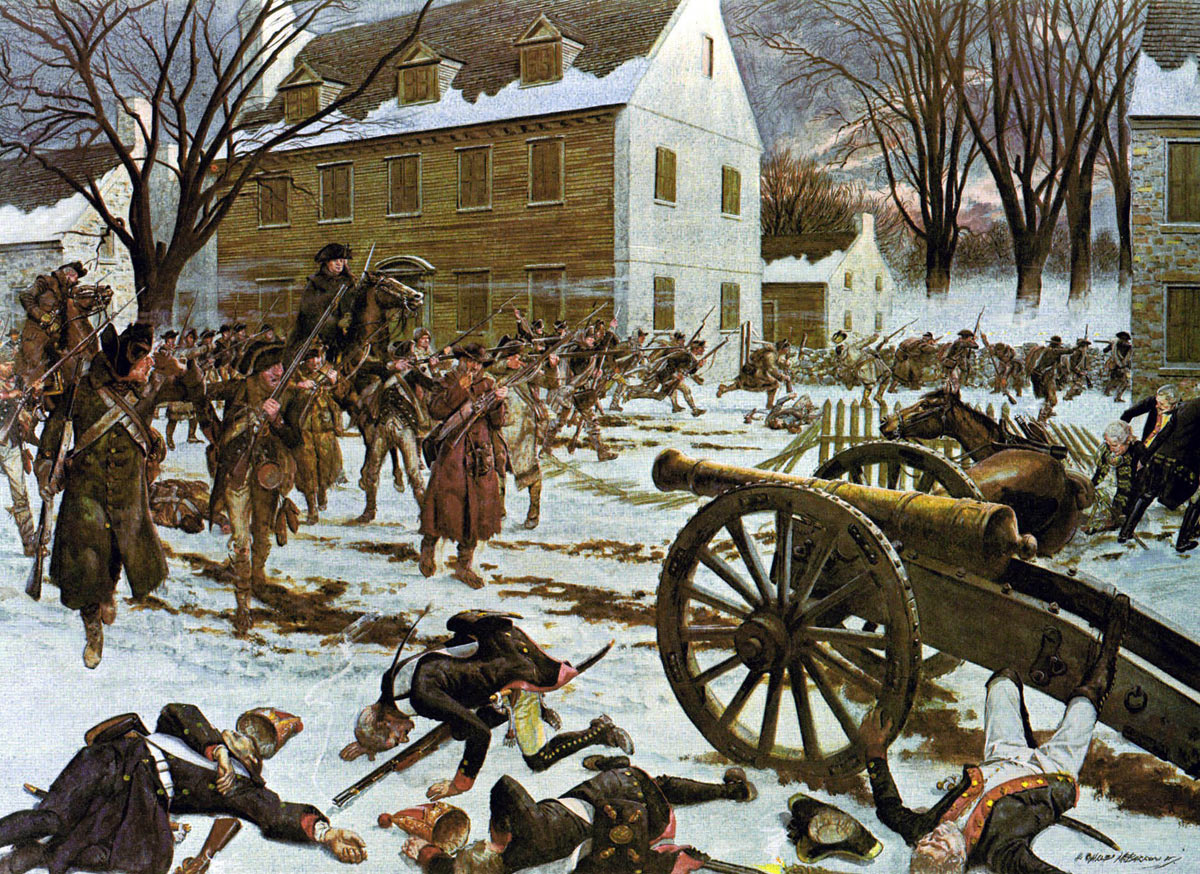
Battle of Trenton on 26th December 1776 in the American Revolutionary War: picture by Charles McBarron
In his force, Washington led some 2,400 men from Virginia, Delaware, Pennsylvania, New Hampshire, Massachusetts, Connecticut and New York.
Washington’s force paraded in the afternoon of 25th December 1776 and set off for the Delaware River, where they embarked in a flotilla of the characteristic Delaware River boats.
It was a cold, dark night and the river was running with flowing ice. At about 11pm, a heavy snow and sleet storm broke. Washington’s force did not reach the east bank until around 3am on 26th December 1776. His soldiers were badly clothed and many did not have shoes.
After landing in New Jersey, Washington’s men marched to Trenton, some of the men leaving traces of blood on the snow.
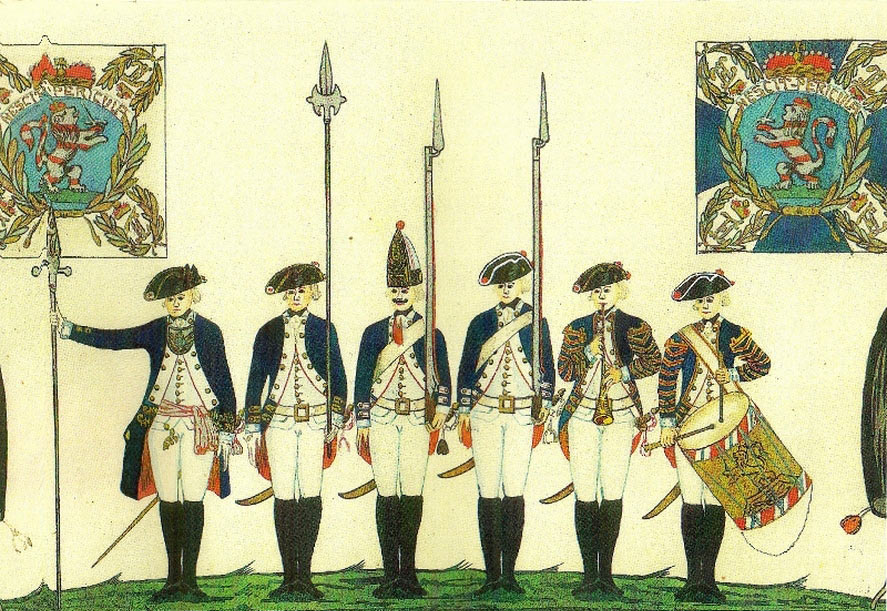
Hessian troops: Battle of Trenton on 26th December 1776 in the American Revolutionary War
The German garrison comprised the regiments of Rahl, Knyphausen and Lossberg, with Hessian jaegers and a troop of the British 16th Light Dragoons.
The Hessian commander, Colonel Rahl, had been ordered to construct defence works around the town, but had not troubled to do so. On the night before the attack, Rahl was at dinner when he was brought information that the Americans were approaching. He ignored the message which was found in his pocket after his death.
The main American force under Washington entered Trenton from the north-west. Sullivan marched around the town and attacked from the south. The rest of the American force took a position to the north-east cutting off the Hessians’ retreat.
The Hessians attempted to form in the town, but were under artillery fire and attack from front and rear. The Americans occupied the houses and shot down the German gunners and foot soldiers in the streets.
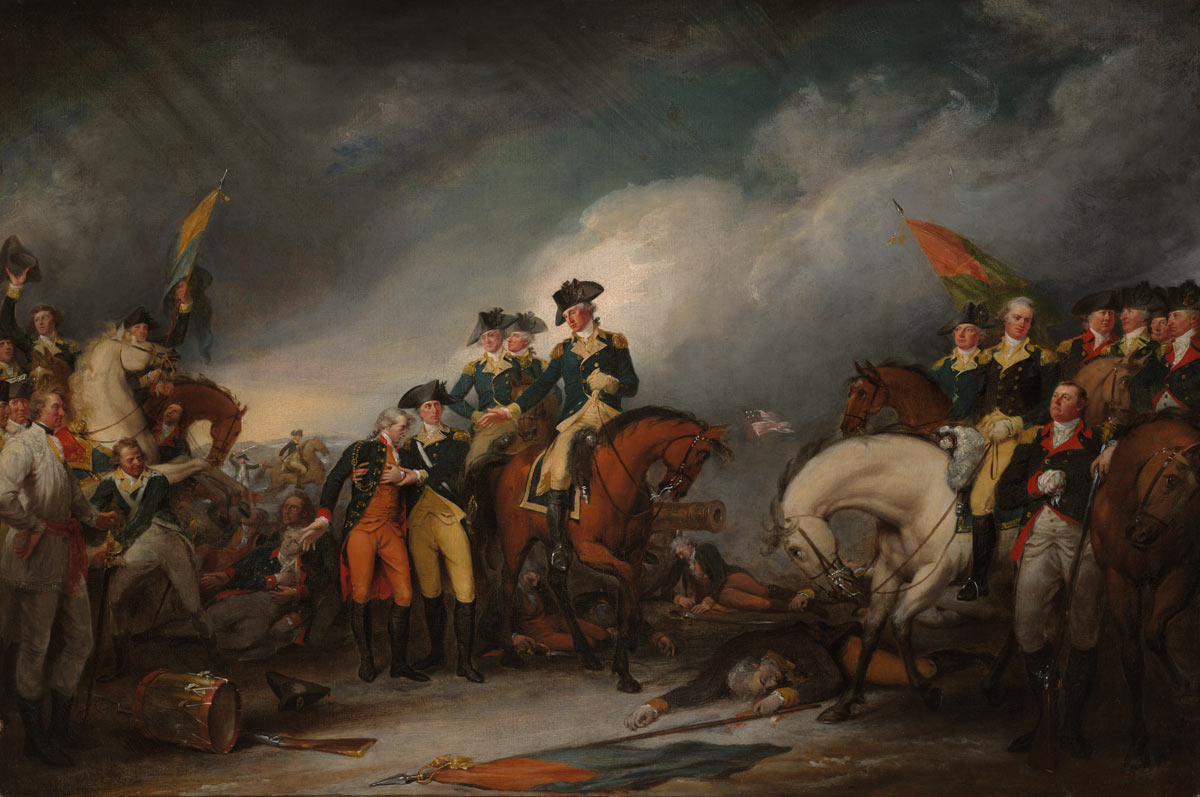
Surrender of Colonel Rahl to General George Washington at the Battle of Trenton on 26th December 1776 in the American Revolutionary War: picture by John Trumbull
Colonel Rahl was fatally wounded. His troops retreated to an orchard in the south-east of the town, where they surrendered.
Ewing and Cadwallader failed to make the river crossing and took no part in the attack.
Casualties at the Battle of Trenton: The Americans suffered 4 wounded casualties. It is said that in addition 2 American soldiers froze to death. The Hessians suffered 20 killed and around 100 wounded. 1,000 were captured.
Captain William Washington and Lieutenant James Monroe were wounded in the battle, the only American officer casualties.
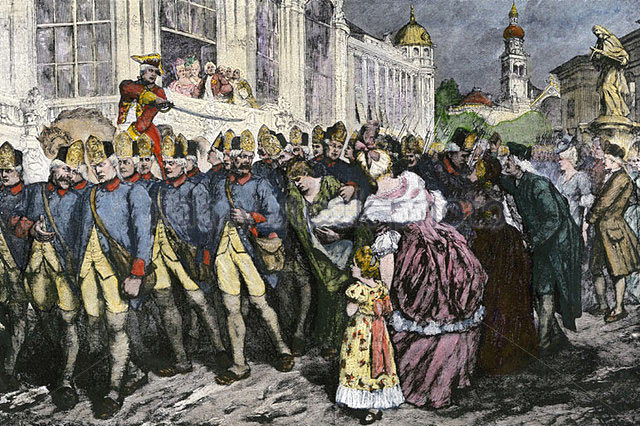
Captured Hessian troops paraded through Philadelphia after the Battle of Trenton on 26th December 1776 in the American Revolutionary War
Follow-up to the Battle of Trenton: After the Battle of Trenton, the captured Hessian troops were paraded through the streets of Philadelphia.
The effect of the battle of Trenton was out of all proportion to the numbers involved and the casualties. The American effort across the colonies was galvanized and the psychological dominance achieved by the British in the preceding year was overturned.
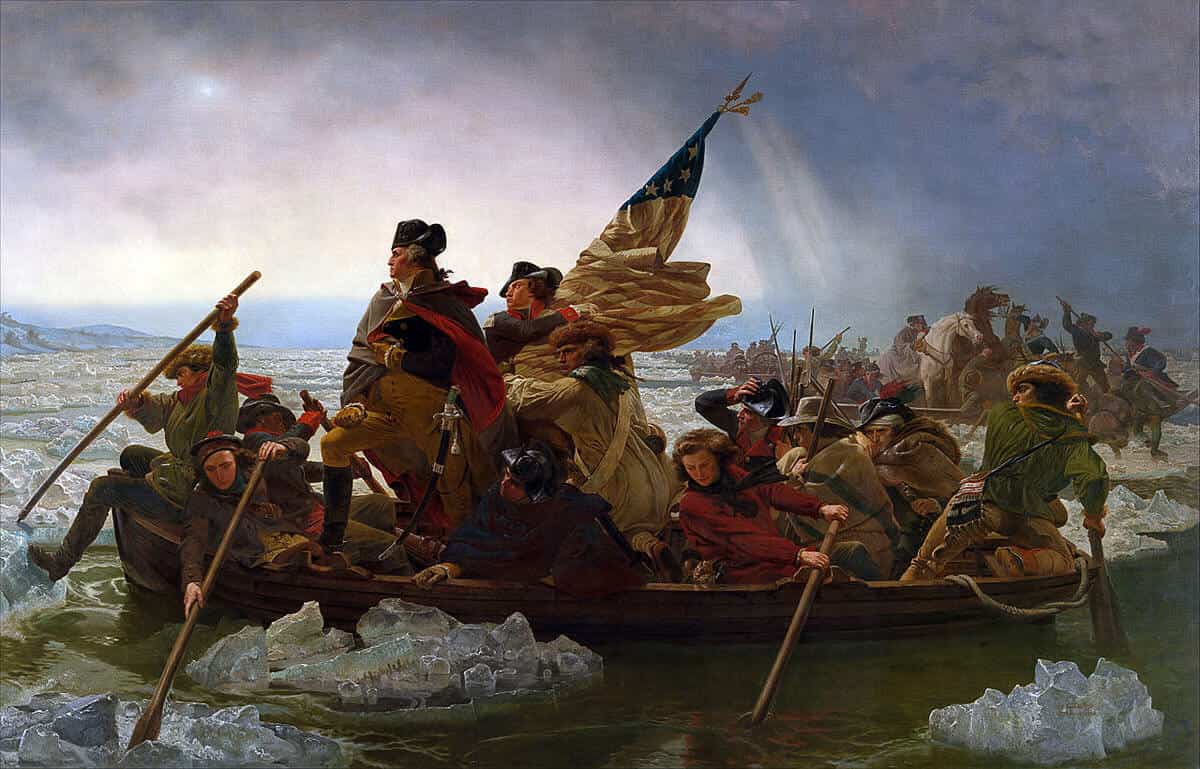
George Washington crossing the Delaware River at the Battle of Trenton on 26th December 1776 in the American Revolutionary War: picture by Emanuel Leutze
The British commander-in-chief Lieutenant General William Howe was stunned to hear that a strong German contingent had been surprised in such a manner and put up so little resistance.
Washington’s constant problem was to maintain the enthusiasm of his army for the war, particularly with the system of one year recruitment, and Trenton proved a much-needed encouragement.
Anecdotes and traditions from the Battle of Trenton:
-
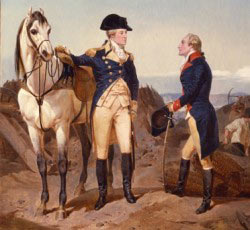
General George Washington with Captain Alexander Hamilton at their first meeting: Battle of Trenton on 26th December 1776 in the American Revolutionary War: picture by Alonzo Chapell
Washington’s army crossing the Delaware in the freezing conditions before the Battle of Trenton, on the night of 25th December 1776, has become an important national image for the United States as shown in Emmanuel Leutze’s picture.
- Present at the battle were: two other future presidents, James Madison and James Monroe, the future Chief Justice of the Supreme Court, John Marshall and Aaron Burr. One of the American artillery sections was commanded by Captain Alexander Hamilton.
References for the Battle of Trenton:
History of the British Army by Sir John Fortescue
The War of the Revolution by Christopher Ward
The American Revolution by Brendan Morrissey
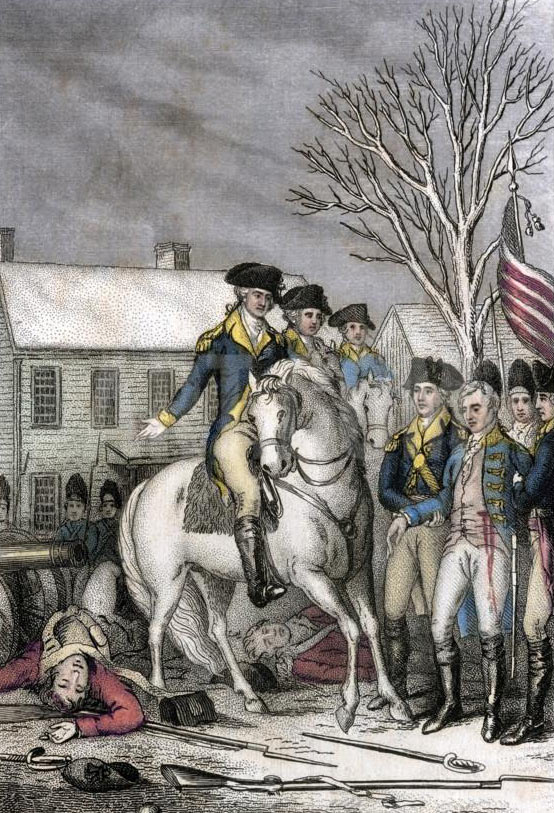
George Washington takes the surrender of Colonel Rahl: Battle of Trenton on 26th December 1776 in the American Revolutionary War
The previous battle of the American Revolutionary War is the Battle of Fort Washington
The next battle of the American Revolutionary War is the Battle of Princeton
To the American Revolutionary War index